
.jpeg)
Erlotinib (Loret) can be taken continuously for up to several years in clinical practice and its long-term safety analysis
Erlotinib (Erlotinib) usually does not clearly stipulate that "it can only be taken for a maximum of several years" in clinical application. The principle of medication is that as long as the disease is still under control and the patient can tolerate the adverse reactions, it can be continued to be taken. For patients with non-small cell lung cancer with EGFR sensitive mutations, erlotinib can be used as long-term maintenance treatment. The actual continuous treatment time ranges from months to years. Individual patients can continue to take it for more than 5 years, or even longer, in clinical practice if the efficacy continues to be significant.
From the perspective of long-term safety, the adverse reactions of erlotinib are mostly mechanism-related, chronic and manageable. The most common ones are rash and diarrhea, which often appear in the early stages of medication. Symptoms tend to stabilize or reduce after long-term use. Liver function abnormalities are also common with long-term treatment, but are mostly mild to moderate and can usually be controlled safely by regularly monitoring liver enzymes and adjusting dosage if necessary.
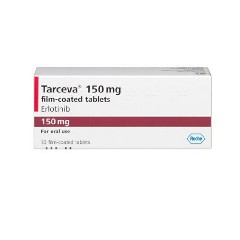
Of particular concern are rare but serious adverse reactions, such as interstitial lung disease, severe liver damage, or progressive skin toxicity. This type of risk will not increase linearly with the number of years of medication. However, once patients taking medication for a long time develop symptoms such as progressive dyspnea, obvious fatigue, or jaundice, the medication should be discontinued and evaluated in time to avoid delays in treatment.
In general, erlotinib can be taken continuously for a long time with close follow-up, and its "usable life" depends on the duration of efficacy and individual tolerance, rather than a fixed number of years. For patients with long-term benefits and controllable adverse reactions, continuous treatment under the guidance of oncologists is a common and reasonable clinical medication strategy.
Keyword tags: erlotinib, EGFR inhibitor, non-small cell lung cancer, long-term medication, safety
ReferenceInformation:https://pubmed.ncbi.nlm.nih.gov/?term=erlotinib
[ 免责声明 ] 本页面内容来自公开渠道(如FDA官网、Drugs官网、原研药厂官网等),仅供持有医疗专业资质的人员用于医学药学研究参考,不构成任何治疗建议或药品推荐。所涉药品可能未在中国大陆获批上市,不适用于中国境内销售和使用。如需治疗,请咨询正规医疗机构。本站不提供药品销售或代购服务。


