
.jpeg)
FDA approves evantuzumab injection (Rybrevant Faspro) for subcutaneous treatment of non-small cell lung cancer
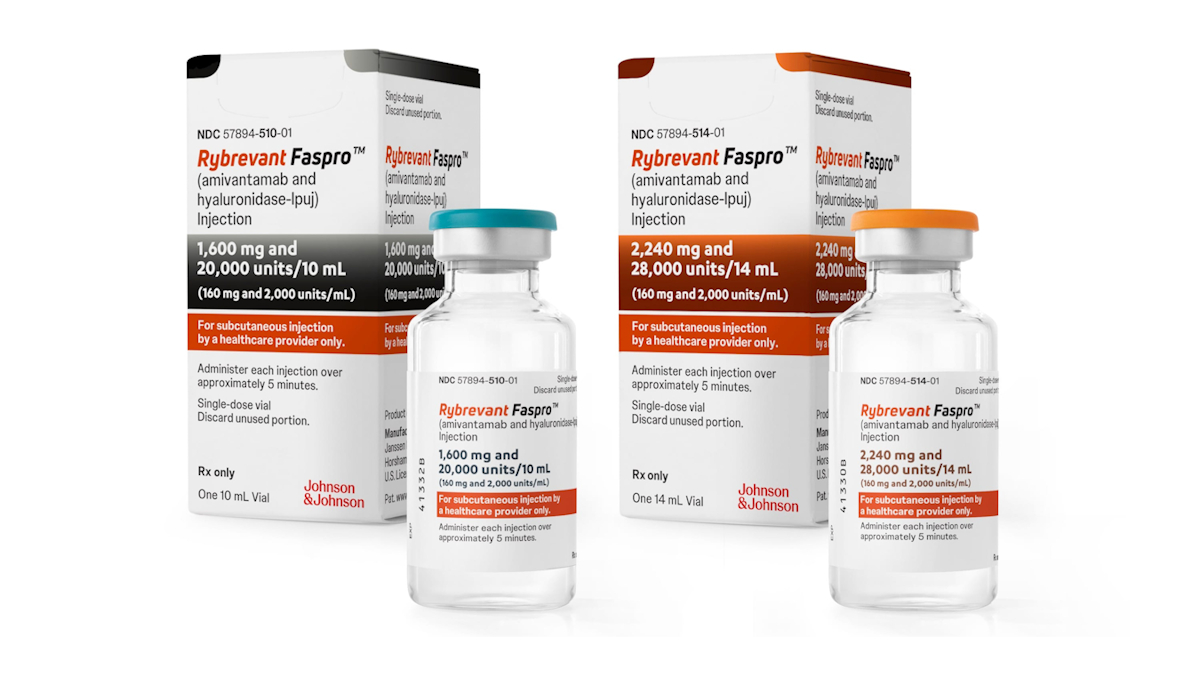
On December 17, 2025, the U.S. Food and Drug Administration (FDA) approved the subcutaneous injection of evantumumab (Rybrevant Faspro; produced by Gensan Biotechnology) for subcutaneous injection in adult patients. This approval makes evantumumab more flexible for all indications of its intravenous version, especially for patients with locally advanced or metastatic non-small cell lung cancer (NSCLC) with EGFR mutations.
1. Approval Background: Expanding Treatment Options
Evantumumab was originally indicated as an intravenous injection for the treatment of patients with locally advanced or metastatic non-small cell lung cancer who have EGFR exon 19 deletions or exon 21 L858R mutations. The FDA-approved subcutaneous injection version (evantumumab and hyaluronidase-lpuj) not only provides patients with a more convenient administration method, but also provides more flexibility in clinical treatment, especially for patients who require long-term treatment.
2. Clinical research:PALOMA-3 trial results
The basis for thisFDA approval comes from the PALOMA-3 trial, which is a randomized, open-label, multi-center, multi-regional clinical study designed to evaluate the safety and efficacy of subcutaneous injection of evantumumab and hyaluronidase-lpuj. The trial is targeting patients with locally advanced or metastatic non-small cell lung cancer who have an EGFR exon 19 deletion or exon 21 L858R substitution mutation.
A total of 418 patients were recruited in the trial, and they were randomly divided into two groups: one group received subcutaneous injection of evantumumab and hyaluronidase-lpuj combined with lazetinib (D-CC), and the other group received intravenous injection of evantumumab combined with lazetinib (IV-CC).
The main evaluation indicators include: overall response rate (ORR);; progression-free survival (PFS); overall survival (OS).
3. Main efficacy data
In the analysis ofPALOMA-3, the efficacy data of subcutaneous injection of evantumumab was similar to that of intravenous injection of evantumumab, and no potential adverse effects on patientOS were found. Drug Concentration and Bioequivalence:
1. For the recommended dose once every two weeks, the geometric mean ratio (GMR) of AUC Day 1 to Day 15 in cycle 2 was 1.03 (95% CI: 0.98, 1.09), showing that drug concentrations for subcutaneous and intravenous injections were comparable.
2. For the recommended dose once every three weeks, the simulated GMR of the average concentration from day 1 to day 21 of cycle 2 is 1.20 (95% CI: 1.15, 1.26), and the steady-state Ctrough is 1.32 (95% CI: 1.23, 1.42), which is in line with the expected drug bioequivalence.
Overall response rate (ORR) and progression-free survival (PFS):
1. There was no significant difference in ORR and PFS between the subcutaneous evantumumab group and the intravenous injection group.
2. This shows that the therapeutic effect of the subcutaneous injection version of evantumumab is consistent with that of traditional intravenous injection.
4. Security Comparison
In thePALOMA-3 trial, the safety profile of the subcutaneous injection group of evantumumab was similar to that of the intravenous injection group. The main adverse reactions included allergic reactions, adverse skin reactions, and interstitial lung disease. However, it is worth noting that administration-related reactions (IRRs) differed between the subcutaneous and intravenous groups.
1. Administration-related reactions (IRRs): The incidence of systemic administration reactions (ARRs) of subcutaneous injection of evantumumab was significantly lower than that of the intravenous injection group, which was 13% in the subcutaneous injection group and 66% in the intravenous injection group. This suggests that the subcutaneous version of evantumumab may be more tolerated during administration and reduce infusion-related adverse effects.
2. Other side effects: In both groups, common adverse reactions also include interstitial lung disease, pneumonia, thrombotic events, ocular toxicity, etc. It is particularly important to note that when evantumumab is combined with lazertinib, patients are at risk of venous thromboembolic events and must be monitored based on the patient's specific situation.
5. Recommended dosage and usage
Subcutaneous Dosage: The recommended dose of subcutaneous evantumumab is based on the patient's baseline weight. See the prescribing information for specific dosage and indications.
Mode of administration: Subcutaneous injection of evantumumab requires injection into the abdomen, and the injection time is approximately 3 to 5 minutes. The subcutaneous delivery method provides a simpler treatment option for patients to receive treatment at home.
Keyword tags: FDA approval, evantumumab , hyaluronidase-lpuj, subcutaneous injection, non-small cell lung cancer, EGFR mutation, locally advanced lung cancer, treatment options, biological agents, drug safety
References: UpdatedDecember 17, 2025, https://www.fda.gov/drugs/resources-information-approved-drugs/fda-approves-amivantamab-and-hyaluronidase-lpuj-subcutaneous-injection
[ 免责声明 ] 本页面内容来自公开渠道(如FDA官网、Drugs官网、原研药厂官网等),仅供持有医疗专业资质的人员用于医学药学研究参考,不构成任何治疗建议或药品推荐。所涉药品可能未在中国大陆获批上市,不适用于中国境内销售和使用。如需治疗,请咨询正规医疗机构。本站不提供药品销售或代购服务。


