
.jpeg)
DREAMM-8 study triplet (pomalidomide/mablantumumab/dexamethasone) maintains PFS, MRD negativity in R/R multiple myeloma
According to DREAMM-8 study (NCT04484623) data provided in 2025, Belantamab mafodotin (Blenrep) plus pomalidomide-Pomalyst and dexamethasone (BPd) improves progression-free survival (PFS) and minimal residual disease (MRD) negativity in patients diagnosed with relapsed/refractory multiple myeloma (MM). In patients who received BPd, the overall response rate (ORR) was 76% (95% CI, 68.6%-82.6%) compared with 72% in patients who received bortezomib (Velcade) plus pomalidomide and dexamethasone (PVd) % (95%CI, 64.1%-79.2%); the complete response rate (CR) was 43% (95%CI, 35.3%-51.4%), the partial response rate (VGPR) was 63% (95%CI, 55.1%-70.8%), and the partial response rate (VGPR) was 39% (95%CI, 30.9%-47.2%).
In the intention-to-treat (ITT) population, MRD-negative rates based on VGPR or better were defined as 10-5, BPd was 35% (95% CI, 28.0% -43.6%), and PVd was 7% (95% CI, 3.8%-13.0%); by post hoc analysis, VGPR or better was 56% and 19% of patients, respectively. In the ITT population, the rates of MRD negativity based on CR or better were 28% (95% CI, 20.9%-35.5%) for BPd and 6% (95% CI, 2.8%-11.3%) for PVd; among patients with CR or better, the rates were 64% and 36%, respectively.
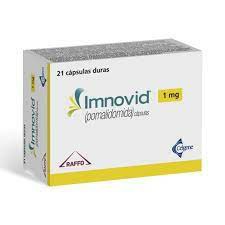
The rates of MRD negativity based on CR or better that persisted for at least 12 months were 15% (95% CI, 10.2% - 22.2%) for BPd and 3% (95% CI, 0.7% - 6.8%) for PVd; notably, among MRD-negative patients with CR or better, 56% of the BPd group and 44% of the PVd group remained MRD negative for 12 months or longer. The median duration of response (DOR) was 16.4 months (95% CI, 11.1-22.5) for BPd and PVd, respectively. The 24-month DOR rates were 65% (95% CI, 55%-73%) and 40% (95% CI, 29%-50%), respectively.
Median PFS was 32.6 months (95% CI, 21.1-NR) with BPd and 12.5 months (95% CI, 9.1-17.6) with PVd (HR, 0.49 ; 95% CI, 0.36-0.67); 24-month PFS rates were 55% (95% CI, 46%-63%) and 31% (95% CI, 22%-39%) respectively. After starting new antimyeloma therapy or death from any cause (PFS2), the median time from randomization to disease progression was 47.1 months (95% CI, 28.4 to NR) compared with 21.7 months (95% CI, 13.8 to 28 .6) respectively (HR, 0.52; 95%CI, 0.38-0.70); the 24-month PFS2 incidence rates were 61% (95%CI, 53%-69%) and 47% (95%CI, 39%-55%) respectively.
Long-term follow-up of the DREAMM-8 trial demonstrated that BPd was superior to PVd on all efficacy endpoints, including PFS, MRD negativity, sustained MRD negativity, and DOR, and that this benefit was maintained after subsequent antimyeloma treatment.
What is the design of the trial?
A total of302 patients were randomly assigned to the BPd group or the PVd group, with a ratio of 1:1. In the BPd arm, patients received intravenous mabelantuzumab 2.5 mg/kg in cycle 1 and then 1.9 mg/kg every 4 weeks starting in cycle 2, pomalidomide 4 mg orally on days 1 through 21, and dexamethasone 40 mg on days 1, 8, 15, and 22 of every 28-day cycle. In the PVd group, treatment was bortezomib 1.3 mg/m2 subcutaneously on days 1, 4, 8, and 11 of cycles 1 to 8, pomalidomide 4 mg orally on days 1 to 14 of a 21-day cycle, and dexamethasone 20 mg orally on the day of bortezomib and the day after.
Patients who achieved VGPR or better were tested for MRD negativity by next-generation sequencing with a sensitivity of 10-5. The trial's primary endpoint was PFS as assessed by an independent review committee. Key secondary endpoints are overall survival, MRD negativity and DOR; other secondary endpoints include ORR, VGPR or better ratio, PFS2, adverse events (AEs) and health-related quality of life.
What are the other data from the trial?
With regard to safety, anyAE occurred in more than 99% of the BPd group and more than 97% of the PVd group, with the incidence of any grade 3 or 4 AE being 91% and 74%, respectively; the incidence of AEs related to the study treatment was 96% and 83%, respectively. AEs resulted in treatment interruptions, dose reductions, and dose interruptions/delays in 22%, 63%, and 91% of the BPd group and in 14%, 61%, and 76% of the PVd group.
Overall, the study results supportBPd as a new outpatient and off-the-shelf BCMA treatment as a standard of care when multiple myeloma first relapses.
References: Updated onDecember 14, 2025, https://www.onclive.com/view/dreamm-8-study-triplet-sustains-pfs-mrd-negativity-in-r-r-multiple-myeloma
[ 免责声明 ] 本页面内容来自公开渠道(如FDA官网、Drugs官网、原研药厂官网等),仅供持有医疗专业资质的人员用于医学药学研究参考,不构成任何治疗建议或药品推荐。所涉药品可能未在中国大陆获批上市,不适用于中国境内销售和使用。如需治疗,请咨询正规医疗机构。本站不提供药品销售或代购服务。


