
.jpeg)
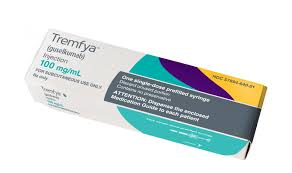
Comparison of efficacy and indications between guselkumab (Tenoya) and secukinumab
Guselkumab (Guselkumab) and secukinumab (Risankizumab) both target interleukins-23(IL-23)p19 subunit monoclonal antibody, used for the treatment of moderate to severe plaque psoriasis. IL-23 plays a key role in the pathogenesis of psoriasis, promoting Th17 cell differentiation and the production of inflammatory factors, thereby causing skin hyperkeratosis and inflammatory response. Both drugs improve the skin symptoms of psoriasis by specifically inhibiting the IL-23 signaling pathway and reducing the release of inflammatory mediators.
In terms of indications, guselkumab is mainly approved for the treatment of adult patients with moderate to severe plaque psoriasis, especially those who have an inadequate response to or are intolerant to traditional systemic treatments (such as methotrexate or cyclosporine). The indications for secukinumab are similar to guselkumab and are also used in adult patients with moderate to severe plaque psoriasis. In clinical practice, both can be used as monotherapy or as an alternative to systemic therapy, especially for patients who require long-term maintenance of efficacy.
In terms of efficacy, both guselkumab and secukinumab showed significant improvement in skin lesions in clinical trials. PASI75, PASI90 and PASI100(i.e. improvement in skin lesion area and severity index 75%, 90%, < The achievement rate of span>100%) is higher among the two drugs, but some studies show that secukinumab has better short-term efficacy and PASI100 The rate is slightly higher than guselkumab, especially some patients can achieve complete clearance of skin lesions within the 12 to 16 weeks of treatment. Guselkumab has stable performance and good safety during long-term maintenance treatment. It also provides more convenient dosing interval options for some patients.
In terms of dosage regimen, guselkumab is usually injected subcutaneously once every 4 weeks, and the maintenance course can be extended to once every 8 weeks, which is suitable for long-term maintenance treatment. Secukinumab is injected twice every 4 weeks in the initial dosing phase, and once every 12 weeks in the subsequent maintenance phase. The dosing interval is longer, which may be more advantageous for patient compliance. Both are injected subcutaneously, which reduces the inconvenience caused by traditional intravenous infusion and reduces the complexity of in-hospital operations.
In terms of safety, both drugs were generally well tolerated, with common adverse reactions including upper respiratory tract infection, headache, injection site reactions and mild gastrointestinal symptoms. The incidence of serious adverse events is low, but infection risks and immune indicators still need to be monitored regularly during use, especially for patients with a history of previous infection or low immune function. Long-term application data show that neither guselkumab nor secukinumab has obvious organ toxicity or serious immune-related complications.
In terms of patient experience, both drugs can significantly improve the quality of life, reduce skin itching and pain, and improve social activities and mental health indexes. Some patients prefer the long-interval dosing regimen of secukinumab to reduce the inconvenience caused by the frequency of injections; the flexibility of guselkumab's treatment course also provides patients with individualized choices, which is especially suitable for high-risk groups who require close follow-up.
Overall, guselkumab (Guselkumab) and secukinumab (Risankizumab) have significant advantages in terms of efficacy, indications and safety, and are both representative drugs for IL-23p19 targeted therapy. The choice of which drug should be evaluated on an individual basis based on the patient's genotype, disease severity, previous treatment response, and lifestyle habits. Through rational drug selection and standardized follow-up, both can provide reliable treatment options for patients with moderate to severe psoriasis in terms of long-term maintenance of efficacy, improvement of quality of life and safety.
In the future, with the accumulation of more real-world studies and long-term follow-up data, the differences in efficacy, safety characteristics and combined treatment potential of guselkumab and secukinumab in different patient groups will become clearer, providing a scientific basis for precise treatment of psoriasis. Doctors and patients can choose the most suitable targeted program based on efficacy indicators, compliance needs and economic status to achieve the best balance between disease management and quality of life.
Keyword tags: guselkumab,IL-23inhibitor, psoriasis, biological agents, efficacy comparison
Reference:https://en.wikipedia.org/wiki/Guselkumab
[ 免责声明 ] 本页面内容来自公开渠道(如FDA官网、Drugs官网、原研药厂官网等),仅供持有医疗专业资质的人员用于医学药学研究参考,不构成任何治疗建议或药品推荐。所涉药品可能未在中国大陆获批上市,不适用于中国境内销售和使用。如需治疗,请咨询正规医疗机构。本站不提供药品销售或代购服务。


