
.jpeg)
The SCALE-UP study: findings from real-world use of upadatinib/reflex in atopic dermatitis
At the Fall 2025 Clinical Dermatology Meeting, the latest findings on the use of upadacitinib (Upadacitinib) to treat patients with atopic dermatitis were presented. In this real-world analysis derived from a scale-up study, the response to treatment with upadacitinib (UPA) in adult patients with moderate to severe atopic dermatitis was examined, specifically based on whether these subjects had previously used advanced systemic therapy (AST).
Key Points
1. Upatinib has shown significant clinical benefit in the treatment of moderate to severe atopic dermatitis, with rapid itching reduction and skin clearance observed in both AST-naïve and AST-experienced patients.
2. The expanded study highlighted improvements in quality of life and sleep outcomes, with many patients experiencing symptom relief within 24 hours of treatment with upadacitinib.
Atopic dermatitis is a chronic inflammatory skin disease characterized by persistent pruritus and recurrent eczematous lesions that has a unique impact on patients' quality of life. Although upadatinib, a selective Janus kinase (JAK)-1 inhibitor approved for moderate to severe disease, has been shown to be effective and safe in previous controlled trials, there is a lack of strong representation of patients previously treated with systemic biologics or small molecules.
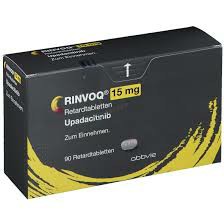
The study was designed to capture treatment effects in a real-world setting, specifically comparing outcomes among patients with and without prior exposure to drugs such as dupilumab, abrocitinib, or tralokinumab. These adults also participated in a patient support program and received at least 2 to 12 months of treatment with upadacitinib. The study subjects were classified into groups that did not receive AST or experienced AST based on their self-reported treatment history. In their investigation, the investigative team looked at several different patient-centered endpoints.
Examples of these endpoints include the proportion of participants achieving minimal itch, defined as the most severe itch numerical rating scale score0 or 1 (WP-NRS 0/1), and the percentage of near-complete skin clearance, indicating body surface area disease involvement of 2% or less (BSA ≤ 2%). In addition, outcomes such as the impact on sleep quality were studied based on patients' overall impression of sleep disturbance caused by AD (PGI sleep AD 0/1) and quality of life score with a Dermatology Life Quality Index (DLQI) score of 0 or 1. People who took part in the analysis were also asked how quickly they noticed improvement in their itching and skin symptoms.
This analysis included65 AST-naïve subjects, more than half of whom had used upadatinib for more than 6 months. There were 159 AST-experienced patients, 49.0% of whom took adarsinib for the same duration. In both cohorts, significant clinical benefit was seen.
The researchers found that56.9% of individuals who did not receive AST and 54.1% of individuals who had previously received treatment reported mild itching. 1 Results for patients related to skin clearance were equally strong, with 72.3% of treatment-naïve patients and 65.4% of experienced subjects having BSA ≤2%.
The research team also found that more than half of the AST-naïve arms (52.3%) and 42.8% of the experienced arms were able to achieve both virtually no itching and near-clear skin. In their assessment of changes in quality of life, the researchers found that such improvements were common, although more pronounced in the untreated cohort. Specifically, 50.8% of subjects who did not undergo AST had no impairment, compared with 37.7% of subjects who had experience with AST.
Participants in the study also reported that about two-thirds of patients in each study group experienced rapid relief of disease symptoms within 24 hours of starting upadacitinib. Among patients classified as "never used similar drugs", 66.5% reported a reduction in itching symptoms; among patients who "ever used similar drugs", this proportion was 65.1%. Sleep-related conditions also performed well: 89.2% of patients who had not used similar medications said their skin conditions had little or no impact on their sleep, compared with 82.4% of patients who had experienced similar medications.
The improvement of skin condition is also very significant: within 3 days, 35.6% of first-time testers and 31.3% of re-testers felt that their skin condition had improved. 67.8% and 68.8% of subjects observed improvement in skin condition within 1 week respectively.
Overall, in this real-world study, all subjects treated with upadacitinib demonstrated rapid and significant improvements in pruritus symptoms, skin condition, quality of life, and sleep quality, regardless of prior systemic therapy.
Reference: Updated on November 19, 2025, https://www.hcplive.com/view/scale-up-findings-real-world-use-upadacitinib-atopic-dermatitis
[ 免责声明 ] 本页面内容来自公开渠道(如FDA官网、Drugs官网、原研药厂官网等),仅供持有医疗专业资质的人员用于医学药学研究参考,不构成任何治疗建议或药品推荐。所涉药品可能未在中国大陆获批上市,不适用于中国境内销售和使用。如需治疗,请咨询正规医疗机构。本站不提供药品销售或代购服务。


