
.jpeg)
Approval extension submitted to EMA for teritusumab/daratumumab in pretreated myeloma
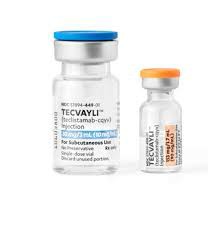
A type II variant application has been submitted to the European Medicines Agency (EMA) seeking approval of teritusumab (Teclistamab-cqyv) in combination with subcutaneous daratumumab (Darzalex; daratumumab SC) for the treatment of adult patients with relapsed/refractory multiple myeloma (MM) who have received at least 1 prior line of therapy. The application is based on findings from the Phase 3 MajesTEC-3 trial (NCT05083169), in which daratumumab SC plus dexamethasone and pomalidomide (Pomalyst ; DPd) or bortezomib (Velcade; DVd; HR, 0.17; 95% CI, 0.12-0.23; P<0.0001), treatment with teritusumab and daratumumab SC reduced the risk of disease progression or death by 83.4%.
Additionally, more than90% of patients remained progression-free at 6 months (n=249) and remained progression-free at 3 years. Based on the statistical significance of the data, the independent data monitoring committee recommended that the study be unblinded. In addition to the EMA submission, Johnson & Johnson also submitted a supplemental biologics license application to the FDA seeking approval of teritusumab and daratumumab SC in the same indication.
When immune function is better preserved, there remains an urgent need for readily available treatment options that can achieve deep and durable responses in the second line. Teritusumab and daratumumab SC are the first off-the-shelf immunotherapy combinations to significantly improve progression-free and overall survival (OS) in relapsed/refractory multiple myeloma compared with the current standard of care as early as second-line treatment.
How is the MajesTEC-3 test conducted and what is its purpose?
MajesTEC-3 is an ongoing phase 3 randomized study comparing the safety and activity of teritusumab plus daratumumab SC (n=291) with the investigator's choice of DPd or DVd (n=296) in patients with relapsed/refractory multiple myeloma who have received 1 to 3 treatment regimens. 2 The study's primary endpoint is progression-free survival (PFS), and secondary endpoints include complete response or better, overall response rate, minimal residual disease negative rate, sensitivity of 10⁻⁵ by next-generation sequencing, OS, time to symptom worsening, and safety.
Additional data presented at the 2025 ASH Annual Meeting and Expo showed that median PFS was not reached in the study arm at a median follow-up of 34.5 months, compared with 18.1 months in the DPd/DVd arm. The 36-month PFS rates were 83.4% and 29.7%, respectively. Additionally, the addition of teritusumab to daratumumab SC resulted in a 3-year OS rate of 83.3% compared with 65.0% in the control regimen, reflecting a 54% reduction in the risk of death with study treatment (HR, 0.46; 95% CI, 0.32-0.65; P<0.0001).
How safe is the solution?
The comparable rates of grade 3/4 treatment-emergent adverse reactions for teritusumabplus daratumumabSC and the standard regimen used as a comparator were 95.1% and 96.6%, respectively. The most common grade 3/4 adverse reactions were cytopenias and infection. Any grade and grade 3/4 infections occurred in 96.5% and 54.1% of patients in the study group and 84.1% and 43.4% in the control group, respectively.
Johnson & Johnson is committed to redefining what is possible in multiple myeloma. An integral part of this strategy is to use the right medications early and combine and sequence them to achieve optimal results. The report to EMA reinforces this approach. Daratumumab has become a cornerstone of care for patients with newly diagnosed multiple myeloma, and by combining it with teritusumab, it has the potential to improve the outcomes of relapsed patients to second-line status as early as possible.
References: Updated onJanuary 6, 2026, https://www.onclive.com/view/approval-expansion-application-is-submitted-to-the-ema-for-teclistamab-daratumumab-in-pretreated-myeloma
[ 免责声明 ] 本页面内容来自公开渠道(如FDA官网、Drugs官网、原研药厂官网等),仅供持有医疗专业资质的人员用于医学药学研究参考,不构成任何治疗建议或药品推荐。所涉药品可能未在中国大陆获批上市,不适用于中国境内销售和使用。如需治疗,请咨询正规医疗机构。本站不提供药品销售或代购服务。


