
.jpeg)
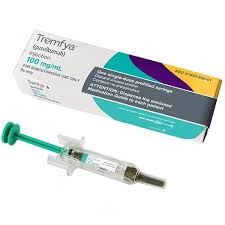
Differences in indications and efficacy and comparison of clinical applications between guselkumab (Tenoya) and cosentyx
Guselkumab (Guselkumab) and Cosentyx (Secukinumab) are both biological agents used for moderate to severe psoriasis and related immune diseases, but they have certain differences in their mechanisms of action, indications and clinical efficacy. Guselkumab is a monoclonal antibody targeting the p19 subunit of interleukin -23 (IL-23) p19 by inhibitingIL-23 signaling pathway regulates the immune inflammatory response from the source and reduces the activation of pro-inflammatory T cells (such as Th17 cells), thereby reducing psoriasis skin lesions and inflammation. Cosentyx is a monoclonal antibody targeting interleukin -17A (IL-17A ). It directly neutralizes inflammatory mediators IL-17A and inhibits downstream inflammatory reactions and keratinocyte proliferation. It has a relatively downstream effect but is quickly effective.
In terms of indications, both are approved for the treatment of moderate to severe plaque psoriasis and can be used in patients who have poor response to traditional systemic treatments or phototherapy. Guselkumab is also approved for active psoriatic arthritis (PsA) in some countries and regions, especially for patients with systemic inflammation or inflammatory joint damage. Cosentyx can also be used for active psoriatic arthritis and ankylosing spondylitis (AS), and it has clinical advantages in improving the symptoms of osteoarthritis and spinal inflammation. Therefore, the patient's specific disease type and comorbid symptoms become important basis for choosing two drugs.
In terms of efficacy, guselkumab can maintain inflammation control for a longer period of time and delay recurrence by inhibiting IL-23. In multiple phase III clinical trials, patients treated with guselkumab achieved PASI 90 (90% improvement in the Psoriasis Area and Severity Index) and PASI 100The response rate is excellent, and long-term follow-up shows that the efficacy is sustainable. The injection interval can be extended to 8 weeks or longer to improve patient compliance. Cosentyx works quickly, and most patients can observe improvement in skin lesions within a few weeks of treatment. The response rates of PASI 75 and PASI 90 are significant, especially in patients with acute inflammation or severe skin lesions. However, the maintenance course of treatment requires regular injections at the recommended frequency.
In terms of safety, both are targeted immunosuppressants. Common adverse reactions include upper respiratory tract infection, injection site reaction and mild gastrointestinal discomfort. Long-term use of guselkumab shows overall good tolerance and mild immune system suppression; because cosentyx directly inhibits IL-17A, some patients may develop mucosal fungal infection or mild immune response. When selecting drugs, an individualized plan should be developed based on the patient's past infection history, immune status, and comorbid diseases, and blood routine and infection indicators should be monitored regularly.
In terms of clinical application comparison, guselkumab is suitable for patients who need long-term maintenance of efficacy and pay attention to injection intervals and compliance. It is especially suitable for patients with chronic inflammation, joint involvement, and psoriasis with obvious systemic manifestations. Kesenting is more suitable for patients with obvious acute skin lesions who want quick relief of symptoms, or cases with combined spondylitis and active arthritis. When making selections, doctors often consider the severity of the patient's skin lesions, joint involvement, living habits, and financial affordability to formulate individualized medication plans.
In addition, the combination treatment strategy of the two drugs has also been explored. For example, guselkumab can be combined with topical drugs or phototherapy to enhance the initial efficacy or improve local skin lesions; Cosentyx may be combined with anti-inflammatory drugs in the early treatment stage to relieve the acute inflammation phase. During the long-term treatment process, patients need to be followed up regularly to evaluate the improvement of skin lesions, joint function and adverse reactions, and adjust the dosage or dressing if necessary to obtain the best effect.
In general, Guselkumab (Guselkumab) and Cosentyx (Secukinumab) have their own advantages in indications and efficacy. Guselkumab targets IL-23 and focuses on long-term maintenance and systemic inflammation control; Cosentyx targets IL-17A and has a rapid onset of action, especially suitable for patients with acute skin lesions and spinal joint involvement. In clinical application, doctors need to select and manage patients based on their individual condition, treatment goals and tolerance, and achieve optimal control and improvement of life quality of psoriasis and related immune diseases through individualized plans and follow-up monitoring.
Reference materials:https://pubmed.ncbi.nlm.nih.gov/30042659/
[ 免责声明 ] 本页面内容来自公开渠道(如FDA官网、Drugs官网、原研药厂官网等),仅供持有医疗专业资质的人员用于医学药学研究参考,不构成任何治疗建议或药品推荐。所涉药品可能未在中国大陆获批上市,不适用于中国境内销售和使用。如需治疗,请咨询正规医疗机构。本站不提供药品销售或代购服务。


