
.jpeg)
Can't I stop taking Upatinib/Refu once I start taking it?
Upadacitinib(Upadacitinib), a JAK inhibitor, has been approved for the treatment of a variety of immune system-related diseases, includingrheumatoid arthritis(RA), active psoriatic arthritis (PA), atopic dermatitis (AD), ulcerative colitis (UC), ankylosing spondylitis (AS) and Crohn's disease (CD), etc. It modulates immune and inflammatory responses by inhibiting specific members of the Janus kinase (JAK) family, thereby effectively slowing the progression of the disease and relieving symptoms.
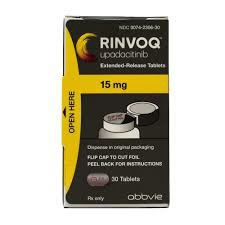
As for whether the drug can be stopped, Upadatinib is not a drug that "needs to be continued forever"But once treatment is started, whether and when the drug can be stopped needs to be decided according to the patient's specific condition under the guidance of a doctor. Different disease and patient circumstances will influence the decision to discontinue medication.
For patients with autoimmune diseases such as rheumatoid arthritis (RA) and active psoriatic arthritis (PA), upadatinib usually needs to be taken long-term to maintain disease control. Relapse of disease activity may occur once the drug is discontinued, especially when disease symptoms are significantly relieved during the initial treatment phase. The risk of relapse after drug discontinuation is higher. Therefore, doctors usually advise patients to maintain a stable medication plan to avoid recurrence or worsening of symptoms due to sudden discontinuation of medication.
For patients with skin or digestive tract immune-related diseases such as atopic dermatitis (AD) and ulcerative colitis (UC), the use of upadatinib also requires long-term management. In these cases, medications not only help control symptoms but also effectively improve the patient's quality of life. When discontinuing a drug, patients usually need to gradually reduce the dose of the drug rather than stopping it suddenly to avoid a sharp resurgence in disease activity.
However, in some special cases, such as chronic inflammatory diseases such as ankylosing spondylitis (AS) and Crohn's disease (CD), if the patient's disease is in complete remission, doctors may consider gradually reducing the drug dose or even discontinuing the drug, but this decision-making requires detailed evaluation and consideration of the patient's specific situation and whether symptoms are adequately controlled.
Reference materials:https://go.drugbank.com/drugs/DB15091
[ 免责声明 ] 本页面内容来自公开渠道(如FDA官网、Drugs官网、原研药厂官网等),仅供持有医疗专业资质的人员用于医学药学研究参考,不构成任何治疗建议或药品推荐。所涉药品可能未在中国大陆获批上市,不适用于中国境内销售和使用。如需治疗,请咨询正规医疗机构。本站不提供药品销售或代购服务。


