
.jpeg)
Analysis of why ribociclib (Kaillon) is evaluated as having significant effects and its long-term clinical treatment advantages
Ribociclib is a selective cyclin-dependent kinase 4/6 (CDK4/6) inhibitor. The core efficacy and clinical value are mainly reflected in the treatment of hormone receptor-positive (HR+) and HER2-negative breast cancer, especially patients with advanced or metastatic breast cancer. This type of breast cancer relies on Cyclin The D‑CDK4/6‑Rb (retinoblastoma protein) pathway drives cells from The span>G1 phase enters the S phase, completing DNA replication and cell division. Ribociclib inhibits the activity of CDK4/6 and arrests the tumor cell cycle in the G1 phase, thereby inhibiting cancer cell proliferation and slowing down tumor growth. Its clear mechanism is to block Rb protein phosphorylation, restore the inhibitory effect on E2F transcription factors, and thereby reduce malignant cell replication, which has been confirmed in in vitro and in vivo experiments.
In clinical practice, the most outstanding clinical value of ribociclib is **significantly extending progression-free survival (PFS) and improving overall survival (OS)**. Multiple Phase III clinical trials, including the MONALEESA series, have shown that compared with endocrine therapy alone, ribociclib combined with endocrine drugs such as aromatase inhibitors (AI) or fulvestrant can significantly reduce the risk of disease progression in patients with advanced breast cancer. A real-world study showed that the median progression-free survival of patients treated with ribociclib reached approximately 27.3 months, and most patients were able to maintain the therapeutic effect without significantly affecting the efficacy even if dose reduction was required, indicating that the drug still has a sustainable anti-tumor effect in real clinical settings.
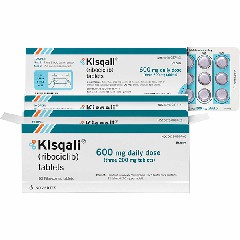
The advantages of long-term treatment are particularly obvious. Compared with traditional chemotherapy and endocrine therapy alone, ribociclib has better long-term tolerance, higher quality of life, and can delay disease progression. 5Years of follow-up data show that in the adjuvant treatment of breast cancer (early breast cancer), ribociclib combined with standard endocrine therapy can significantly reduce the risk of recurrence by about 28%, and continues to show benefits after the completion of treatment. Even in the 3 follow-up period after discontinuation of treatment, no new safety signals have emerged, which is of great significance for the long-term management of high-risk conditions.
In addition, the clinical value of ribociclib is also reflected in its applicability to a wider patient population, including premenopausal or perimenopausal patients, a feature that not all other similar CDK4/6 inhibitors have. In the first-line treatment, ribociclib combined with endocrine therapy as the basic regimen not only shows a higher disease control rate in plasma cancer cells, but also real-world data shows that even in the context of more complex disease courses and multi-line treatments, its safety is controllable and adverse reactions can be managed, providing patients with longer disease progression-free time and better quality of life.
In general, ribociclib has achieved significant clinical efficacy in the treatment of advanced breast cancer by precisely targeting cell cycle checkpoints and delaying malignant cell proliferation. It also has long-term treatment advantages, including significantly extending progression-free survival, improving overall survival trends, and manageable long-term safety, making it an important treatment option for HR+/HER2-breast cancer patients.
Reference materials:https://pubmed.ncbi.nlm.nih.gov/36476018/
[ 免责声明 ] 本页面内容来自公开渠道(如FDA官网、Drugs官网、原研药厂官网等),仅供持有医疗专业资质的人员用于医学药学研究参考,不构成任何治疗建议或药品推荐。所涉药品可能未在中国大陆获批上市,不适用于中国境内销售和使用。如需治疗,请咨询正规医疗机构。本站不提供药品销售或代购服务。


