
.jpeg)
Contraindications and precautions for taking talquetamab-tgvs
Talquetamab is a new immunotherapy drug used to treat relapsed or refractory multiple myeloma. Although the drug provides patients with new treatment hope, patients still need to be alert to a series of possible contraindications and precautions during use to ensure the safety and effectiveness of the treatment. The following are some contraindications and precautions that require special attention during treatment with Talvey.
First, cytokine release syndrome (CRS) is one of the most serious potential side effects of Taquitutumab treatment. Cytokine release syndrome is a series of symptoms caused by overactivation of the immune system. Common manifestations include fever, chills, hypotension, headache, tachycardia, and hypoxia. In severe cases, CRS can lead to life-threatening complications such as acute respiratory distress syndrome, cardiac dysfunction, renal and/or liver failure, and even disseminated intravascular coagulation (DIC). Therefore, if patients develop symptoms of CRS while using Talvey, they should seek medical help immediately. In severe cases, treatment may need to be discontinued until CRS resolves, or permanent discontinuation may be considered if there is no long-term improvement.
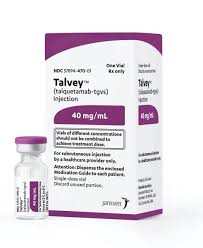
Secondly, neurotoxicity, includingICANS (immune cell-mediated nervous system toxicity), is also a matter of special concern when using Taquitutumab. Common neurotoxic manifestations include headache, encephalopathy, movement disorders, and sensory neuropathy. Because neurotoxicity may result in a decrease in the patient's level of consciousness, patients are advised to avoid driving or operating heavy machinery during dose escalation, and particularly for 48 hours after completion of the escalation, until symptoms are relieved.
Oral toxicity and weight loss are another common side effects. Patients may experience oral-related toxicities during use of Talvey, including taste changes, dry mouth, dysphagia, and stomatitis. In addition, weight loss is a common adverse effect. Patients should monitor their weight regularly and take appropriate measures if weight loss is significant.
Infection is another risk with taquitumab treatment. The most common are bacterial infections, such as sepsis, and viral infections such as COVID-19. Patients should undergo appropriate infection screening and take prophylactic antimicrobial measures before using Talvey and during treatment. If a serious infection occurs, treatment with Talvey may need to be paused or stopped, depending on the type and severity of the infection.
Cytopenias, especially neutropenia and thrombocytopenia, are also used in patientsSide effects must be paid close attention to when taking Talvey. During the treatment process, doctors should regularly monitor the patient's hematological indicators, adjust the treatment plan according to the degree of blood cell reduction, and suspend or stop using Talvey if necessary.
皮肤毒性也是塔奎妥单抗治疗中的常见问题,症状包括皮疹、斑丘疹和红斑等。在少数情况下,皮肤反应可能发展为3级或更严重的反应。为应对这一副作用,早期干预和治疗显得尤为重要。皮肤毒性严重时,应考虑暂停或停止Talvey的使用。
最后,肝中毒是塔奎妥单抗治疗过程中必须警惕的另一个问题。肝酶的升高,尤其是ALT和AST的升高,少数患者还可能出现总胆红素的升高。由于肝功能损害可能伴随CRS发生,因此需要在治疗过程中定期监测患者的肝功能。若肝功能异常明显,应根据临床指征决定是否暂停或停止治疗。
参考资料:https://dailymed.nlm.nih.gov/dailymed/drugInfo.cfm?setid=9001355e-003d-4d4e-b4ce-337e0fd14952
[ 免责声明 ] 本页面内容来自公开渠道(如FDA官网、Drugs官网、原研药厂官网等),仅供持有医疗专业资质的人员用于医学药学研究参考,不构成任何治疗建议或药品推荐。所涉药品可能未在中国大陆获批上市,不适用于中国境内销售和使用。如需治疗,请咨询正规医疗机构。本站不提供药品销售或代购服务。


