
.jpeg)
Revumenib-REVUFORJ introduction and detailed explanation of indications, pharmacological mechanisms and clinical applications
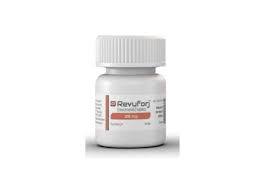
Revumenib (trade name: Revuforj) is an oral small molecule targeted drug that belongs to the category of "menin inhibitors". Its main indications include acute leukemias with two genetic backgrounds: one is with KMT2A Relapsed or refractory acute leukemia with gene translocation (translocation) (in adults or children, age ≥ 1 years old). The second is with NPM1. Patients with relapsed or refractory acute myeloid leukemia (AML).
In terms of pharmacological mechanism, Revimeinib inhibits the interaction between the protein Menin and the KMT2A fusion protein (or the transcription complex on which the NPM1 mutation depends), destroying its ability to abnormally initiate and maintain the expression of leukemia-related genes. Under normal circumstances, the fused protein of KMT2A (also known as MLL) relies on menin to maintain abnormal proliferation of tumor cells and prevent differentiation. Revimenib can selectively and reversibly bind to menin , thereby blocking the formation of menin–KMT2A complex, causing leukemia cells to lose the "support" to maintain their pathological state, restore differentiation or death, thereby reducing lesions and restoring bone marrow hematopoietic function.
As for clinical application and efficacy, key data come from its core trial AUGMENT-101. In pair 104 name KMT2A-rearrangement (KMT2Ar) Relapse/In the treatment of patients with refractory acute leukemia, the overall rate of achieving complete remission (CR) or partial hematological recovery plus CRh after oral treatment with revimenib is approximately 21.2%. The median response maintenance time is 6.4 months, and some patients can no longer rely on red blood cells, / or platelet transfusions.
In 2025for patients with relapsed NPM1 mutations / refractory AML , revemenib monotherapy showed a CR+CRh rate of approximately 23.1%. About 17% of patients who were transfusion-dependent became no longer dependent on blood transfusions; among those who were not dependent on blood transfusions, nearly half remained transfusion-free. These results mark revimenib as the first menin inhibitor approved for acute leukemia in these two genetic backgrounds.
Despite encouraging efficacy, revimenib is not without risks. The most serious adverse reaction that requires special attention is "differentiation syndrome, DS". DS The symptoms include fever, dyspnea, hypoxia, limb or peripheral edema, rapid weight gain, pleural or pericardial effusion, decreased renal function or hypotension, etc., which can sometimes be life-threatening. In clinical trials, approximately 29-33% of patients developed DS, of which approximately 13% were 3~4 level of seriousness, some patients even died from it. Therefore, close monitoring is required during use. If DS is suspected, systemic glucocorticoid treatment should be initiated immediately and appropriate support should be provided.
In addition, Revimenib may also cause QT prolongation of the QT interval (electrocardiogram changes), electrolyte disorders (such as low potassium, low magnesium), elevated liver enzymes, bleeding, infection, blood cell decreases, muscle or bone pain, gastrointestinal discomfort, etc. Electrolyte abnormalities should be corrected before treatment, and a baseline electrocardiogram (ECG) should be performed. If QTcF > 450 ms, its use should be avoided; intensive early monitoring is required during treatment. ECG (at least once a week, and then once a month). If QTcF is prolonged or the electrolytes are abnormal, the dose should be adjusted or the drug should be discontinued according to the instructions.
Revimenib is taken as oral tablets (tablets), can be taken on an empty stomach or with a low-fat meal. The dose is adjusted based on patient weight and concomitant use of strong CYP3A inhibitors. Currently there are 25 mg, 110 mg and 160 mg and other dosage strengths. If the patient weighs < 40 kg, the appropriate dose can be obtained through the expanded access program .
For clinical applications, the patient's genotype (KMT2Ar or NPM1m) , previous treatment history, bone marrow status, blood transfusion dependence, heart / renal function, electrolyte status and other factors should be comprehensively considered, combined with hematopoietic stem cell transplantation (HSCT) and other treatment options to jointly develop individualized treatment plans. Since revimenib is the first and currently only approved menin inhibitor, its emergence provides a valuable new option for patients with relapsed / refractory acute leukemia, especially those who are ineffective with traditional chemotherapy and have poor prognosis. There are also many studies underway in the future to try to combine it with standard chemotherapy, other targeted drugs or immunotherapy to improve the remission rate and durability.
All in all, Revimenib represents an important advance in “precision medicine” in cancer treatment. Through the menin inhibition mechanism, it has achieved considerable remission rates and curative effects for acute leukemias with specific genetic backgrounds. At the same time, adverse reactions, especially differentiation syndrome, heart rhythm and electrolyte problems, also require strict monitoring and management. For patients who meet the indications, Revimanib can be used as an effective treatment under the guidance of experienced hematology/oncologists. For the future, it also has positive prospects in the exploration of combination therapy, early treatment stages and wider indications.
Reference materials:https://www.cancer.gov/about-cancer
[ 免责声明 ] 本页面内容来自公开渠道(如FDA官网、Drugs官网、原研药厂官网等),仅供持有医疗专业资质的人员用于医学药学研究参考,不构成任何治疗建议或药品推荐。所涉药品可能未在中国大陆获批上市,不适用于中国境内销售和使用。如需治疗,请咨询正规医疗机构。本站不提供药品销售或代购服务。


