
.jpeg)
Comprehensive explanation of the differences in efficacy and indications between isatuximab (Xacoy) and daratumumab
Isatuximab and daratumumab are monoclonal antibodies targeting CD38 and are widely used in the treatment of multiple myeloma. Although the two drugs have the same target, there are certain differences in molecular structure, administration methods and clinical applications. Appropriate drugs need to be selected according to the patient's specific conditions. Isatuximab is an IgG1 type monoclonal antibody that can mediate cytotoxicity through antibody-dependent cell-mediated cytotoxicity (ADCC) that relies on immune effector cells, Antibody-dependent phagocytosis (ADCP) and complement-dependent cytotoxicity (CDC) kill multiple myeloma cells and directly induce apoptosis. Daratumumab also mainly relies on the ADCC and CDC mechanisms. However, clinical studies have shown that it can be used in combination with a variety of chemotherapy regimens, has stable efficacy, and has shown good efficacy in both newly treated and relapsed and refractory myeloma patients.
In terms of indications, isatuximab is mainly used in combination with immunomodulatory drugs (such as lenalidomide or pomalidomide) and dexamethasone to treat patients with relapsed or refractory multiple myeloma who have previously received at least one type of treatment regimen. In contrast, daratumumab has a wider range of indications. It can be used for relapsed and refractory multiple myeloma and is also approved for treatment-naive patients, especially for elderly patients or high-risk patients who are not suitable for transplantation. There are more clinical data to support its use as a single agent or combination regimen. In addition, daratumumab is available in two delivery methods: intravenous injection and subcutaneous injection, providing patients with more flexible treatment options.
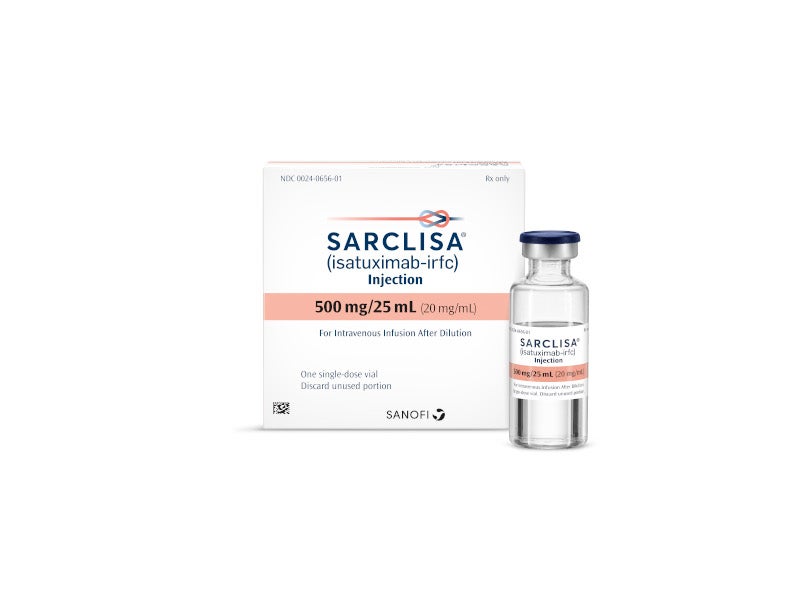
In terms of efficacy, both showed significant reductions in tumor burden and improvements in response rates. In the study of isatuximab combined with pomalidomide and dexamethasone, the overall response rate (ORR) of patients can reach 60% or more Some patients can achieve deep responses, including complete response (CR) and very good partial response (VGPR). The regimen of daratumumab combined with lenalidomide or polymademide can usually achieve an ORR of more than 70%, and some regimens show that Progression-free survival (PFS) and overall survival (OS) were significantly prolonged, especially in treatment-naïve high-risk patients. Although the efficacy of the two is similar, isatuximab shows a unique ability to induce apoptosis in some relapsed or refractory patients and may be more advantageous in specific subpopulations.
In terms of safety, both isatuximab and daratumumab may cause infusion-related reactions, infection risks, and hematological adverse events. Isatuximab usually requires prophylactic medication, such as antihistamines, corticosteroids, and antipyretic analgesics, before infusion to reduce the risk of infusion reactions. The subcutaneous administration of daratumumab reduces infusion time and risk of reactions, but close monitoring for infection and hematological abnormalities is still required. During clinical selection, doctors will develop an individualized plan based on the patient's previous treatment history, age, liver and kidney function, and comorbid symptoms to achieve maximum efficacy and minimum toxic side effects.
In summary, although isatuximab and daratumumab target the same CD38 molecule, there are differences in the scope of indications, administration methods, efficacy characteristics and safety management. Isatuximab shows unique advantages in patients with relapsed and refractory multiple myeloma and is suitable for use in combination with immunomodulatory drugs; daratumumab has wider indications and can be chosen by both newly treated and relapsed patients, and subcutaneous injection brings convenience to medication. In clinical application, reasonable selection should be based on the patient's condition, previous treatments and economic conditions to ensure optimal efficacy and safety management.
Reference materials:https://www.nlm.nih.gov/
[ 免责声明 ] 本页面内容来自公开渠道(如FDA官网、Drugs官网、原研药厂官网等),仅供持有医疗专业资质的人员用于医学药学研究参考,不构成任何治疗建议或药品推荐。所涉药品可能未在中国大陆获批上市,不适用于中国境内销售和使用。如需治疗,请咨询正规医疗机构。本站不提供药品销售或代购服务。


