
.jpeg)
Analysis of the efficacy and patient feedback of aprocitentan in the treatment of pulmonary arterial hypertension
Aprocitentan is a new dual endothelin receptor antagonist (ERA). Its main function is to simultaneously block endothelin A (ETA) and endothelin. B (ETB) receptor, thereby inhibiting endothelin‑1 (ET‑1)-mediated vasoconstriction, smooth muscle proliferation and vascular remodeling. ET‑1 Plays a central role in the pathogenesis of pulmonary arterial hypertension (PAH), and long-term elevated ET‑1 Levels can lead to constriction of arterioles, thickening of vessel walls, and increased workload on the right heart. By blocking ETA and ETB , aprecitentan can theoretically reduce pulmonary artery pressure, improve hemodynamics, and inhibit pulmonary artery remodeling, which provides a pharmacological basis for its potential use in PAH . Pharmacokinetic studies show that aprecitentan is well absorbed orally, has a long half-life, and has stable blood concentration, making it convenient to take once-daily oral administration for chronic diseases. This is particularly important for patients with long-term treatment of PAH .
Currently, Aprecitentan has been clinically studied and approved in patients with drug-resistant hypertension. Its Phase 3 PRECISION study shows that in patients whose blood pressure cannot be effectively controlled despite standard antihypertensive treatment, daily oral administration of Aprecitentan can significantly reduce systolic and diastolic blood pressure, and the effect can be maintained for weeks to months. This provides a theoretical basis for exploring its application in PAH because PAH patients also have problems such as vasoconstriction, blood pressure fluctuations and vascular remodeling. Despite this, as of now, aprecitentan has not been officially approved for PAH and there is a lack of large-scale randomized controlled trial data. Therefore, its clinical use for PAH is still an out-of-bounds use. Any trial use needs to be conducted under strict monitoring to evaluate efficacy and safety.
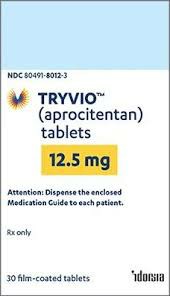
Based on patient feedback and clinical observations, aprecitentan is generally well tolerated in the treatment of drug-resistant hypertension. Common adverse reactions include lower extremity edema, fluid retention, and mild decrease in blood pressure. Some patients may also experience mild changes in hemoglobin and plasma volume. Since PAH patients themselves may have right ventricular dysfunction and fluid retention tendency, when applying aprecitentan to this group of people, special attention needs to be paid to changes in weight, lower limb edema, liver and kidney function, and cardiac ultrasound indicators. In addition, some patients may experience mild gastrointestinal reactions or an increase in blood uric acid during the early stages of taking the drug, which can be managed through dose adjustment or monitoring. Although direct reports on the use of PAH in patients are currently lacking, the improved blood pressure stability and good tolerability observed in patients with drug-resistant hypertension may provide a reference for future exploration of its application in pulmonary circulatory diseases.
From the perspective of future research and clinical application, aprecitentan still has potential for development in PAH . In the future, clinical trials specifically targeting PAH need to be carried out to systematically evaluate its impact on key indicators such as pulmonary artery pressure, right ventricular function, 6 minute walking distance, heart failure hospitalization rate, and survival rate. At the same time, a strict safety monitoring mechanism should be established, including monitoring of fluid balance, kidney function, electrolytes and liver function, as well as regular cardiac ultrasound and electrocardiogram examinations. For patients, it is still not recommended to use aprecitentan as a routine PAH treatment. If it needs to be tried, it should be done under the guidance of a cardiovascular or respiratory specialist, and priority should be given to PAH drugs that are supported by evidence, such as epoprost and phosphodiesterase-5 Inhibitors or other endothelin receptor antagonists. For patients with hypertension and mild pulmonary hypertension, aprecitentan can still be used as a treatment option for drug-resistant hypertension, and its safety and hemodynamic improvement can indirectly provide some reference for pulmonary circulation management.
In short, aprecitentan has a clear dual endothelin receptor antagonistic effect, and its pharmacological mechanism has positive theoretical significance in pulmonary hypertension, but clinical evidence is not enough to support routine use. Existing research on drug-resistant hypertension provides a reference basis for drug efficacy and safety, but the efficacy and long-term safety for PAH patients still need further research and verification. In exploratory applications, doctors' guidance should be strictly followed, comprehensive monitoring should be carried out, and traditional PAH drugs should be combined for individualized management to ensure the effectiveness and safety of the treatment and provide scientific basis for possible future clinical expansion.
Reference materials:https://go.drugbank.com/drugs/DB15059
[ 免责声明 ] 本页面内容来自公开渠道(如FDA官网、Drugs官网、原研药厂官网等),仅供持有医疗专业资质的人员用于医学药学研究参考,不构成任何治疗建议或药品推荐。所涉药品可能未在中国大陆获批上市,不适用于中国境内销售和使用。如需治疗,请咨询正规医疗机构。本站不提供药品销售或代购服务。


