
.jpeg)
Which is better, fostatinib/fotantinib or eltrombopag?
In the long-term management of diseases such as chronic immune thrombocytopenia (ITP), Fostamatinib/Fostamatinib and Eltrombopag are both commonly used oral treatment options in clinical practice. Many patients often directly ask "which one is better" when faced with these two drugs. However, judging from overseas medical data and real-world drug use experience, there is no unified answer to this question. A more reasonable way to understand it is: the two have different mechanisms of action, and there are obvious differences in applicable groups and treatment goals. The choice should be based on individualization.
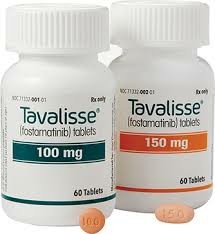
Fostatinib is an oral inhibitor targeting spleen tyrosine kinase (Syk). Its main function is to block the antibody-mediated platelet destruction process. By inhibiting key signaling pathways within immune cells, fostatinib reduces platelet clearance by the spleen and reticuloendothelial system, thereby improving platelet levels. This mechanism determines that it is more focused on "reducing damage" and often has more theoretical advantages in patients with obvious immune abnormalities. Overseas data often regard fostatinib as a treatment option that targets immune signaling pathways, emphasizing its potential value for patients who have failed to respond to previous multi-line treatments.
In contrast, Eltrombopag is a thrombopoietin receptor agonist, and its core idea is to "promote production." By stimulating bone marrow megakaryocyte maturation and platelet production, eltrombopag increases platelet counts in peripheral blood. This mechanism does not directly interfere with the immune system's destruction of platelets, but achieves dynamic balance by increasing supply. Therefore, for patients with adequate bone marrow hematopoietic function and poor tolerance to immunosuppressive treatments, eltrombopag is often more likely to achieve a stable response.
In practical applications, there are also differences in the medication experience and management focus of the two drugs. Fostatinib places more emphasis on follow-up management of immune-related adverse reactions and blood pressure, liver function and other indicators, while eltrombopag requires special attention to its interaction with diet and metal ion intake, as well as the risk of excessive platelet elevation during long-term use. In overseas clinical practice, doctors usually comprehensively evaluate which option is more suitable based on the patient's previous treatment history, comorbid diseases, and lifestyle factors.
From the perspective of comparative efficacy, overseas experts generally do not recommend simply using“good or bad” to evaluate these two drugs. For patients whose autoantibody-mediated destruction predominates and who have poor response to multiple treatments, fostatinib may be more consistent with the pathological mechanism; while for patients who need to rapidly increase platelet levels and wish to avoid deep immune modulation, eltrombopag is often more acceptable.
Taken together, fostatinib and eltrombopag are not in direct competition, but represent two different treatment ideas. The truly"better" choice depends on disease characteristics, past efficacy responses, and individual patient risk factors. Under the guidance of professional doctors, precise matching based on mechanism differences is often more meaningful than simply comparing the pros and cons of drugs.
Reference materials:https://go.drugbank.com/drugs/DB12010
[ 免责声明 ] 本页面内容来自公开渠道(如FDA官网、Drugs官网、原研药厂官网等),仅供持有医疗专业资质的人员用于医学药学研究参考,不构成任何治疗建议或药品推荐。所涉药品可能未在中国大陆获批上市,不适用于中国境内销售和使用。如需治疗,请咨询正规医疗机构。本站不提供药品销售或代购服务。


