
.jpeg)
Reasons and countermeasures for platelet drop after using up Roprostim (Huierning)
Romiplostim (Romiplostim) is a relatively common reaction in which platelets decrease after stopping or using up the drug. The core reason is closely related to the mechanism of action of the drug. Roprostim is a TPO receptor agonist that maintains patients' platelet levels by stimulating bone marrow megakaryocytes to produce platelets. When the drug is stopped, this exogenous stimulation weakens rapidly, and the patient's own megakaryocyte function often has not yet fully recovered. Therefore, platelets may fall back within days to weeks, and some patients may even be lower than the level before drug withdrawal, which is the so-called "rebound thrombocytopenia."
Another reason for platelet decline is that some patients are highly dose-dependent on loprostim. If the original dose can maintain the appropriate level, the decline after drug withdrawal is usually mild; but if the patient uses a higher dose to maintain platelets, the interruption of bone marrow stimulation after drug withdrawal is more obvious, so the decline may be faster. In addition, the underlying disease itself (such as autoimmune destruction of ITP) is still ongoing, which will also accelerate platelet consumption, making the decline more obvious. In some patients, a more significant decline may also be induced when infection, fatigue, excessive drinking, or concomitant medications (such as antibiotics, NSAIDs) affect bone marrow function.
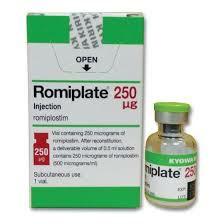
Among the coping strategies, the first thing is to avoid stopping Ropremilast suddenly, and try to gradually reduce the dose according to the doctor’s advice, so that the bone marrow has time to adapt to the process of reducing external stimulation. Usually doctors will adjust the dose every 1~2 weeks based on platelet trends until a level is reached where it is safe to stop taking the drug. If platelets drop after stopping the drug but no obvious bleeding occurs, close monitoring can be done to see if they can rise on their own; if the platelets fall below the critical value (such as (<30
In terms of long-term management, patients should regularly review blood routine and record platelet fluctuation trends so that doctors can judge whether the treatment course needs to be adjusted. The occurrence of rebound after stopping the drug does not mean that the drug is ineffective, nor does it mean that it cannot be used again; most patients can still recover a good response after restarting the drug. In addition, you should avoid high-risk behaviors that affect platelets, such as strenuous exercise, drinking alcohol, and using drugs that affect blood coagulation, and seek medical attention promptly when symptoms such as gum bleeding, skin ecchymosis, or black stool occur. With reasonable monitoring and gradual dose adjustment, most patients can safely cope with the risk of platelet decline after drug discontinuation.
Reference materials:https://www.ema.europa.eu/en/homepage
[ 免责声明 ] 本页面内容来自公开渠道(如FDA官网、Drugs官网、原研药厂官网等),仅供持有医疗专业资质的人员用于医学药学研究参考,不构成任何治疗建议或药品推荐。所涉药品可能未在中国大陆获批上市,不适用于中国境内销售和使用。如需治疗,请咨询正规医疗机构。本站不提供药品销售或代购服务。


