
.jpeg)
How many days does the targeted drug Giritinib (Segatan) begin to take effect and the course of treatment is observed
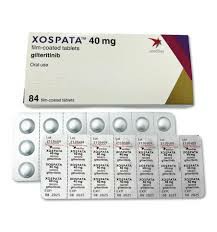
Gilitinib (Gilteritinib), as a FLT3 inhibitor, is mainly used to treat relapsed or refractory FLT3 mutated acute myeloid leukemia (AML). Its pharmacological mechanism of action is to inhibit tumor cell signaling pathways and block cell proliferation. Therefore, the onset of action is usually not observed in units of "days" but is evaluated based on hematological changes and bone marrow response. Clinical data shows that some patients may experience early changes such as a decrease in white blood cell count and a decrease in blasts about 7–14 days after taking the drug. However, this is only a preliminary response and does not represent the final efficacy. Drugs need to continuously and stably inhibit FLT3 signaling in the body to produce sustainable anti-leukemia effects.
In the formal treatment evaluation, the first effect observation of gilitinib is usually done after 4 weeks. Most studies adopt the "28 days as one cycle" monitoring model, and evaluate the response through blood routine and bone marrow puncture after 1–2 cycles of treatment. Some patients may take 6–8 weeks to show significant hematological improvement, including the gradual recovery of blood cells and a reduction in the proportion of blast cells in the bone marrow. Therefore, giritinib is not a fast-acting drug, and treatment course evaluation requires patience and must be taken continuously without interruption to avoid reducing the inhibitory effect.
In terms of long-term treatment, if the patient experiences complete remission (CR) or hematological improvement, doctors usually recommend continuing maintenance treatment to consolidate the efficacy and reduce the risk of leukemia rebound. Continuous treatment may last for several months or even longer, especially in patients waiting for hematopoietic stem cell transplantation. Giritinib is often used as a bridging treatment to ensure that the disease enters the next stage of treatment in a stable state. In patients not scheduled for transplantation, if the drug is well tolerated and the disease is controlled, long-term maintenance is generally recommended until progression or intolerable toxicity occurs.
If the patient does not see significant improvement in the early stages of treatment, it cannot be prematurely deemed ineffective because there are large differences among individuals, especially those who have received multiple lines of treatment in the past and have complex conditions. If there is still no response after 2–3 cycles, a doctor needs to evaluate whether to change the regimen. In addition, liver function and cardiac electrophysiology (such as QT interval) and creatinine levels to ensure the safety of the treatment. Generally speaking, the onset and course of treatment of giritinib need to be determined based on periodic evaluation under the guidance of professional doctors, and short-term changes cannot be used as the only indicator.
Reference materials:https://www.drugs.com/
[ 免责声明 ] 本页面内容来自公开渠道(如FDA官网、Drugs官网、原研药厂官网等),仅供持有医疗专业资质的人员用于医学药学研究参考,不构成任何治疗建议或药品推荐。所涉药品可能未在中国大陆获批上市,不适用于中国境内销售和使用。如需治疗,请咨询正规医疗机构。本站不提供药品销售或代购服务。


