
.jpeg)
Which one is better: evantumumab/caridas or osimertinib?
Amivantamab and Osimertinib are both highly effective drugs currently used to treat patients with non-small cell lung cancer (NSCLC), especially in EGFR mutation-positive patients. They represent different treatment strategies and targets respectively. With the continuous progress of targeted therapy, clinical decision-making problems are often faced in selecting appropriate drugs. Each has its own characteristics and advantages, and the specific advantages and disadvantages need to be judged based on the specific situation of the patient.
First of all, Osimertinib (Osimertinib) is a third-generation EGFR inhibitor that is widely used to treat EGFR mutation-positive non-small cell lung cancer. Its mechanism is to effectively inhibit the proliferation of cancer cells by selectively inhibiting EGFR mutations (including T790M mutations) and EGFR gene rearrangements. As a targeted therapy, osimertinib has high selectivity and fewer side effects, especially in the second-line treatment of EGFR T790M mutation-positive patients. Osimertinib has a significant inhibitory effect on lung cancer cells and can effectively cross the blood-brain barrier. It also has good efficacy in patients with brain metastases.
However, although osimertinib has achieved significant clinical efficacy, its side effects still exist, including rash, diarrhea, oral ulcers, etc., and some patients may develop drug resistance. One of the resistance mechanisms is changes in mutation sites, which lead to a decrease in the efficacy of osimertinib. Therefore, as resistance issues arise, treatment regimens may need to be adjusted or combined with other drugs.
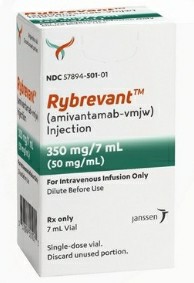
Unlike osimertinib, Amivantumab (Amivantamab) is a bispecific antibody that specifically targets EGFR and MET receptors for targeted therapy. It exerts a broader anti-tumor effect by inhibiting both EGFR and MET receptors. Studies have shown that evantumumab can significantly delay disease progression in patients with non-small cell lung cancer with EGFR mutations and MET amplification, especially those who are resistant to other EGFR inhibitors. The mechanism of action of evantumumab makes it show greater potential in overcoming resistance to some traditional EGFR-targeting drugs.
In addition, the side effects of evantumumab are relatively controllable. The most common side effects are rash, fever, fatigue, etc., which are usually reversible. In some clinical trials, the efficacy of evantumumab was further improved when combined with other anti-cancer drugs, indicating its potential in combination treatments. Especially in patients with EGFR and MET double positivity, evantumumab has shown good efficacy. For those patients who have developed resistance to EGFR-targeted therapy, evantumumab undoubtedly provides a new treatment option.
However, evantuzumab is not without limitations. As a new type of therapeutic drug, although the preliminary clinical results are encouraging, its long-term efficacy and safety still need more clinical data to further verify. In addition, the price of evantumumab is relatively high, which may put pressure on the financial burden of some patients, and special attention may need to be paid to immune-related adverse reactions during use.
In clinical decision-making, the choice of evantumumab or osimertinib mainly depends on the patient's specific situation. Osimertinib may be the first choice for patients who are positive for EGFR mutations and have not developed MET amplification or resistance, because of its stable effect and high safety profile, especially for patients with brain metastases. For those patients who have become resistant to traditional EGFR inhibitors and have MET amplification or other resistance mechanisms, evantumumab may provide an effective alternative.
Reference materials:https://www.rybrevant.com/
[ 免责声明 ] 本页面内容来自公开渠道(如FDA官网、Drugs官网、原研药厂官网等),仅供持有医疗专业资质的人员用于医学药学研究参考,不构成任何治疗建议或药品推荐。所涉药品可能未在中国大陆获批上市,不适用于中国境内销售和使用。如需治疗,请咨询正规医疗机构。本站不提供药品销售或代购服务。


