
.jpeg)
Erdafitinib/Bocco is safe and shows preliminary efficacy in F3T3 fusion+ glioma
According toETTCN 10559 Results from the safety enrollment cohort of the Phase 2 trial (NCT05859334), in which Erdafitinib had a predictable toxicity profile and showed an early efficacy signal in patients with recurrent or progressive IDH wild-type gliomas with FGFR-TACC (F3T3) gene fusions, were presented at the 2025 Society for Neuro-Oncology Annual Meeting. The drug also produced durable responses in this analysis.
In October 2024, the safety enrollment cohort completed treatment, and continuous daily administration of 8 mg was determined as the recommended phase 2 dose (RP2D). One patient experienced a dose-limiting toxicity (DLT), grade 3 central serous retinopathy; this was the only grade 3 treatment-emergent adverse effect (TEAE) reported and the only TEAE that resulted in discontinuation of erdafinib. During the DLT in Cycle 1, all patients reported any TEAEs and grade 1 TEAEs; there were no grade 4 or higher TEAEs. Grade 2 TEAEs included dyspepsia (n=2), hyperphosphatemia (n=1), and hyponatremia (n=1). Grade 1 hyperphosphatemia was common (n=4). There were no TEAEs leading to erdafitinib dose reduction or treatment interruption. Of note, 1 patient developed grade 3 cerebral edema, which was considered unrelated to treatment.
Preliminary efficacy data are available for 5 patients. Best overall response was complete response (CR; n=1), partial response (PR; n=2), stable disease (n=1), and progressive disease (n=1). The safety profile of erdafitinib in glioma is within the expected known safety profile in other tumor types, enabling the establishment of durable responses in this population.
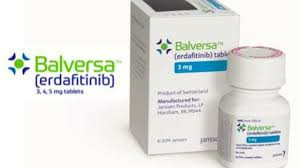
What is the rationale for studying edafinil in patients with glioma?
F3T3 gene fusion is the most common gene fusion in adult gliomas. About 3% to 6% of adult patients with IDH wild-type glioma have F3T3 gene fusion. F3T3 fusions are truncal changes that occur during glioma development and independently predict favorable outcome in glioma; these fusions are also retained in recurrent glioblastoma. In vitro and in vivo studies have shown that F3T3 fusions have strong oncogenic activity and sensitivity to F3T3 inhibitors.
Erdafitinib is a potent oral pancreatinibFGFR TKI, approved by the U.S. Food and Drug Administration in 2024, for the salvage treatment of patients with locally advanced or metastatic urothelial cancer with FGFR alterations whose disease has progressed during or after treatment with 1 or more prior lines of systemic therapy. Responses to erdafitinib in glioma patients have been reported in basket trials, but prior to the ETCTN 10559 study, no clinical trials had focused solely on examining the drug's activity in gliomas with F3T3 fusions.
Idafitinib for the treatment of gliomaWhat is the design of the ETCTN 10559 trial?
This multicenter, single-arm trial enrolled patients with recurrent or progressiveF3T3 fusion-positive glioma. The trial was designed with 2 safety induction cohorts. Cohort 1 (n=6) evaluated the drug at a continuous dose of 8 mg daily. If at least 2 DLT events are observed, patients will be enrolled in safety run-in cohort 2 (n = 6) and receive continuous daily doses of 6 mg of idafinib; if 1 DLT event or no DLT events are observed in either cohort, an additional 21 patients will be enrolled in the dose expansion cohort. The trial will be stopped if at least 2 DLT events are observed at the 6-mg dose level.
The currently reported cohort study determined the safety, tolerability, and RP2D of erdafitinib at the 8 mg dose in this population The mean age of patients was 63.3 years (standard deviation, 6.9), and the median age was 64 years (range, 52-72 years). The three patients were a male and a female. The majority of patients were white (n=5) rather than Hispanic or Latino (n=4). All patients had grade 4 glioblastoma and had been treated with radiotherapy and temozolomide. Most patients had a Karnofsky performance score of 90 (n=5), and 2 patients had received 1, 2, and 3 prior therapies, respectively.
What case studies show about the efficacy of erdafitinib in treating glioblastoma
Results from 2 case studies emphasizing safety in the run-in cohort One patient was a 60-year-old woman with recurrent World Health Organization (WHO) grade 4 F3T3 fusion-positive glioblastoma. The patient underwent biopsy followed by radiotherapy plus temozolomide, followed by 6 cycles of adjuvant temozolomide. Fifteen months after initial diagnosis, the patient developed clinical and radiographic disease. She enrolled in ETCTN 10559 in April 2024 and completed 19 cycles of treatment. The patient is receiving treatment and achieved PR at cycle 1 and CR at cycle 13.
The second case study involved a patient68-year-old male with IDH wild-type, F3T3 fusion-positive, World Health Organization grade 4 glioblastoma with unmethylated MGMT promoter. The patient underwent subtotal resection of the right parietotemporal mass, followed by 3 weeks of hypofractionated radiotherapy with concurrent temozolomide, followed by 4 cycles of adjuvant temozolomide. He registered ETCTN 10559 in October 2024 and obtained PR in the 8th cycle.
What are the next steps for studying idartinib in patients with glioma?
Thedose expansion cohort of the Phase 2 trial will begin enrollment in February 2025. Overall, 90% of the planned 21 patients have been enrolled and 12 clinical trial sites have been initiated.
References:https://www.onclive.com/view/erdafitinib-is-safe-and-shows-preliminary-efficacy-in-f3t3-fusion-glioma
[ 免责声明 ] 本页面内容来自公开渠道(如FDA官网、Drugs官网、原研药厂官网等),仅供持有医疗专业资质的人员用于医学药学研究参考,不构成任何治疗建议或药品推荐。所涉药品可能未在中国大陆获批上市,不适用于中国境内销售和使用。如需治疗,请咨询正规医疗机构。本站不提供药品销售或代购服务。


