
.jpeg)
Tarlatamab-Imdelltra’s mechanism of action and clinical application in the treatment of small cell lung cancer
Tarlatamab (trade name: Imdelltra) is a novel bispecific T cell-engaging antibody (BiTE) that can simultaneously target DLL3 (delta-like ligand) on the surface of tumor cells 3) and CD3 molecules on the surface of T cells, thereby recruiting T cells to the vicinity of tumor cells and activating their killing function. By forming immune synapses, T cells release cytotoxic substances such as perforin and granzymes, which directly lead to tumor cell apoptosis. Because DLL3 is highly expressed in small cell lung cancer (SCLC) tumor cells but has low or no expression in most normal tissues, talatumumab has good target selectivity.
In the clinical application of small cell lung cancer, talatumumab is mainly used for the treatment of extensive-stage small cell lung cancer (ES-SCLC) after failure of platinum-based chemotherapy. Phase II clinical studies show that the objective response rate (ORR) of patients treated with talatumumab is approximately 40%, and some patients can achieve sustained remission and significantly improve their quality of life. The latest phase III study further shows that the drug can significantly reduce the risk of death and improve the median overall survival time, providing a new treatment option for patients who fail or relapse after chemotherapy.
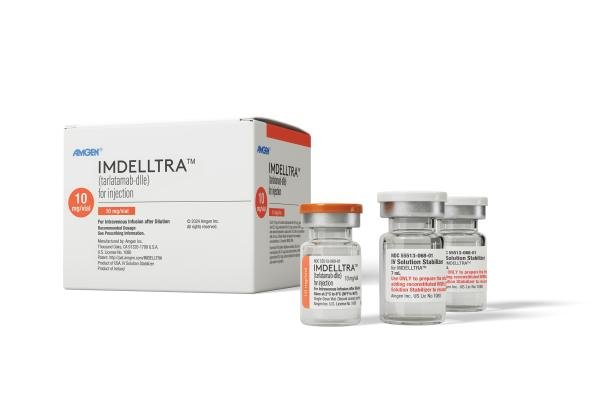
The advantage of Talatumumab lies in its innovative mechanism. Unlike traditional chemotherapy or immune checkpoint inhibitors, it can directly guide T cells to tumor cells and induce tumor cell death. At the same time, due to the highly selective expression of DLL3 , the side effects of this drug on normal tissues are theoretically relatively controllable. However, its limitations are also obvious, including the possibility of cytokine release syndrome (CRS), neurotoxicity, and hematological toxicity, which require strict monitoring and management by experienced medical institutions.
There are several key things to note when using talatumumab: Use the “step-up” dosage regimen initially to reduce CRSRisks: Closely monitor blood routine, liver and kidney function, and immune-related adverse reactions during treatment, and be alert to neurotoxicity and infection risks. Since this drug is still a new type of immunotherapy, it may not have been approved for marketing in China or some regions. Its use must be carried out in professional centers and the patient's full informed consent must be ensured. Under strict monitoring, talatumumab provides a breakthrough immunotherapy option for patients with small cell lung cancer.
Reference materials:https://www.drugs.com/
[ 免责声明 ] 本页面内容来自公开渠道(如FDA官网、Drugs官网、原研药厂官网等),仅供持有医疗专业资质的人员用于医学药学研究参考,不构成任何治疗建议或药品推荐。所涉药品可能未在中国大陆获批上市,不适用于中国境内销售和使用。如需治疗,请咨询正规医疗机构。本站不提供药品销售或代购服务。


