
.jpeg)
Comparison between entrectinib/Luo Shengquan and crizotinib
Entrectinib and crizotinib are two targeted drugs that are widely used to treat lung cancer. They belong to different targeted therapy categories and have shown significant efficacy in the treatment of non-small cell lung cancer (NSCLC), especially tumors with ALK (anaplastic lymphoma kinase) and ROS1 gene rearrangements. Although their mechanisms of action are similar and they both target the above-mentioned targets, they have certain differences in indications, efficacy, drug resistance, and side effects.
1. Drug action mechanism and target
Both entrectinib and crizotinib are tyrosine kinase inhibitors (TKI), which target tumors with ALK and ROS1 gene mutations. Crizotinib is the first targeted drug approved for ALK-positive non-small cell lung cancer and has been widely used in first- and second-line treatment. It blocks the proliferation and spread of tumor cells by inhibiting the kinase activities of ALK and ROS1. However, crizotinib also has certain limitations, especially when faced with drug resistance, patients often experience a decline in efficacy.
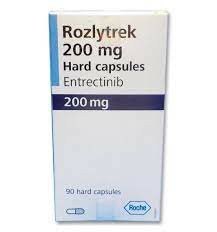
Entrectinib is similar to crizotinib in its targets, but it not only has a strong inhibitory effect onALK and ROS1, but can also effectively act on other targets, such as TRK (nerve growth factor receptor receptor tyrosine kinase). This broad-spectrum target inhibition enables entrectinib to still show good efficacy in drug resistance conditions that are difficult to control with crizotinib. Entrectinib also has a strong ability to cross the blood-brain barrier, making it particularly effective in the treatment of patients with brain metastases.
2. Comparison of clinical efficacy
In clinical application, the difference in efficacy between entrectinib and crizotinib is also very obvious. Although crizotinib has shown certain efficacy in ALK-positive patients, as treatment continues, many patients will develop resistance. Especially after a period of use, about 60% of patients will develop resistance to crizotinib. This is mainly related to mutations in the ALK gene, which prevent crizotinib from effectively inhibiting the growth of tumor cells.
In contrast, entrectinib is effective in crizotinib-resistant patientsALK-positive patients demonstrated stronger efficacy. In clinical studies, entrectinib can not only effectively prolong progression-free survival (PFS), but also significantly improve patients' overall survival (OS). In addition, entrectinib performs particularly well in patients with brain metastases, making it an important option for the treatment of patients with lung cancer and brain metastases. It successfully reduces the incidence of brain metastasis by better penetrating the blood-brain barrier.
The efficacy of entrectinib is more durable, and long-term disease stabilization or partial remission can even be seen in some patients. In contrast, the efficacy of crizotinib may decrease significantly after several months in some cases, especially after resistance mutations emerge.
3. Drug resistance and side effects
Although entrectinib has strong antitumor activity, it is not without side effects. Common adverse reactions include fatigue, constipation, loss of appetite, abnormal liver function, etc., but in general, the side effects of entrectinib are milder than other targeted drugs, and most patients' side effects can be alleviated through appropriate management.
The side effects of crizotinib include vision problems, gastrointestinal discomfort, abnormal liver function, etc., and its drug resistance problem is relatively prominent. Resistance mutations to crizotinib are often manifested as mutations in theALK gene. These mutations cause the drug to fail, thus affecting its efficacy. As treatment continues, some patients may need to switch to other drugs, such as entrectinib, to continue fighting tumor progression.
For those patients who develop drug resistance during crizotinib treatment, entrectinib is a more effective alternative drug that can reverse drug resistance to a certain extent and continue to maintain good efficacy.
Reference materials:https://www.roche.com/products/rozlytrek
[ 免责声明 ] 本页面内容来自公开渠道(如FDA官网、Drugs官网、原研药厂官网等),仅供持有医疗专业资质的人员用于医学药学研究参考,不构成任何治疗建议或药品推荐。所涉药品可能未在中国大陆获批上市,不适用于中国境内销售和使用。如需治疗,请咨询正规医疗机构。本站不提供药品销售或代购服务。


