
.jpeg)
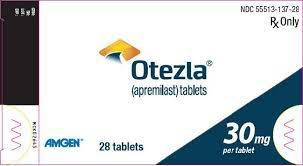
Analysis of the difference in efficacy between apremilast (Otera) and deuterated colexitinib
Apremilast and deucravatinib (DeucravatinibDeucravacitinib) are both oral small molecule immunomodulatory drugs. However, their targets, mechanisms of action and clinical efficacy are significantly different, so their applications and efficacy in the treatment of autoimmune diseases are also different. The following is a detailed analysis from the aspects of pharmacological mechanism, clinical efficacy, efficacy maintenance and safety.
First of all, in terms of pharmacological mechanism of action, apremilast is an inhibitor of phosphodiesterase 4 (PDE4). It increases intracellular cyclic adenosine monophosphate (cAMP by inhibiting PDE4 activity. ) levels, thereby regulating the inflammatory cytokine network, including reducing the release of TNF-α, IL-17, IL-23 and increasing the production of anti-inflammatory factors IL-10. Its function is to indirectly regulate the inflammatory response through downstream signals, so it is a broad-spectrum immunomodulator. Deuterated colexitinib is a selective TYK2 inhibitor that precisely inhibits immune cell activation and the release of pro-inflammatory factors by directly blocking the IL-12, IL-23 and Type I interferon signaling pathways. Compared with apremilast, deuterated colexitinib has a higher target on key pathogenic pathways and has a more direct effect.
Secondly, in terms of clinical efficacy, the two perform differently in the treatment of psoriasis, plaque psoriasis and related joint lesions. Apremilast can significantly improve the area and thickness of skin lesions in patients with moderate to severe psoriasis, but the proportion of patients with complete clearing of the rash is relatively limited, and its onset of effect generally ranges from 4 to weeks to achieve the maximum effect. It usually takes 12 to 16 weeks. Deuterated colexitinib has shown faster onset of action and higher skin lesion improvement rate in clinical trials. In some studies, significant PASI-75 (Psoriasis Area and Severity Index reduction by 75%) improvement rate can be observed in some studies after 12 weeks of treatment. Its ability to precisely target the IL-23/IL-12 pathway makes it more advantageous in controlling inflammatory responses and reducing immune cell activation.
Third, from the perspective of efficacy maintenance, long-term use of apremilast can maintain moderate remission, but its efficacy fluctuates greatly. Some patients may experience treatment tolerance or reduced efficacy due to the relatively extensive inhibition of PDE4. Due to its highly selective inhibition of TYK2, long-term use of deuterated colexitinib can stably inhibit key pro-inflammatory pathways, thereby maintaining improvement of skin lesions and control of systemic symptoms, and shows high persistence of efficacy in chronic inflammatory conditions. In addition, deuterated colexitinib may also be superior to apremilast in improving concomitant joint pathology and reducing inflammatory markers.
Finally, from the perspective of safety and tolerability, both are oral small molecule drugs, but common adverse reactions of apremilast include diarrhea, nausea, loss of appetite and weight loss, which may affect compliance in some patients. Deuterated colexitinib selectively targets TYK2 and has limited impact on other JAK pathways. Therefore, it has lower hematological side effects and infection risks, but it is still necessary to pay attention to possible mild to moderate headaches, fatigue, upper respiratory tract infections and other reactions. Overall, deuterated colexitinib shows higher targeting and rapid onset of action advantages, while apremilast still has controllable safety and efficacy in broad-spectrum immunomodulation and various inflammatory diseases.
To sum up, the difference in efficacy between apremilast and deuterated colexitinib is mainly reflected in the accuracy of the target, speed of onset of action, maintenance of efficacy and ability to inhibit key pathogenic pathways. Deuterated colexitinib can improve the inflammatory status of psoriasis and related autoimmune diseases faster and more sustainably by selectively inhibiting TYK2, while apremilast is suitable for a wider range of inflammation management scenarios due to its broad-spectrum immunomodulatory effects. In clinical application, drug selection should be based on the patient's disease severity, comorbidities, tolerance and treatment goals for individualized plan design to achieve optimal efficacy and safety.
Reference materials:https://www.drugs.com/
xa0
[ 免责声明 ] 本页面内容来自公开渠道(如FDA官网、Drugs官网、原研药厂官网等),仅供持有医疗专业资质的人员用于医学药学研究参考,不构成任何治疗建议或药品推荐。所涉药品可能未在中国大陆获批上市,不适用于中国境内销售和使用。如需治疗,请咨询正规医疗机构。本站不提供药品销售或代购服务。


