
.jpeg)
Tarlatamab-Imdelltra manufacturer information and original research background analysis
Tarlatamab (trade name: Imdelltra) is an innovative bispecific T cell engager (BiTE®) developed by the American biopharmaceutical company Amgen Similar structure), mainly used to treat adult patients with extensive-stage small cell lung cancer (ES-SCLC) after progression on platinum-based chemotherapy. As an original drug, Amgen has completed the entire process management of the drug from early development, clinical trials to obtaining FDA approval, ensuring the quality and efficacy of the drug. In 2024 5 u200bu200b month, the drug received accelerated approval from the US FDA and became the first bispecific immunotherapy drug targeting the DLL3 target.
Tarlatamab has a unique mechanism of action. One end binds to DLL3 (delta‑like ligand 3) on the surface of tumor cells, and the other end binds to T CD3 on the cell surface, thus "guiding" T cells to tumor cells and initiating cytotoxicity. DLL3 It is highly expressed in most small cell lung cancer cells and less expressed in normal tissues, so the drug has good tumor selectivity. This "bridge type" immune mechanism enables Tarlatamab to directly activate the patient's own immune system to fight tumor cells while reducing damage to healthy cells.
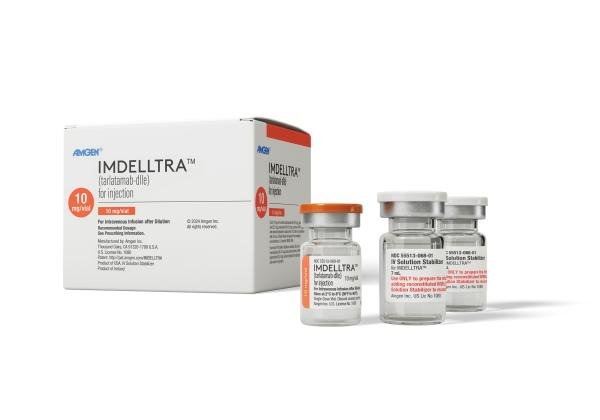
In clinical studies, DeLLphi‑301 Research shows that Tarlatamab can be used in advanced patients who have failed platinum-based chemotherapyES‑SCLC The objective response rate among patients is approximately 40%, and the median response duration is approximately 9.7 months. Data from this study provided the basis for FDA accelerated approval. Subsequent expansion studies (such as DeLLphi‑304) are exploring the potential of Tarlatamab in early treatment, different doses and other tumor types, showing broad clinical prospects.
In general, Tarlatamab (Imdelltra) , as the original drug of Amgen , represents the innovative direction of DLL3 targeted bispecific T cellular immunotherapy. Its development and approval not only provide new treatment options for patients with refractory small cell lung cancer, but also mark the entry of tumor immunotherapy into a more precise and personalized stage. In the future, the early application and combination treatment strategies of this drug will become the focus of clinical research and market attention.
Reference materials:https://www.drugs.com/
[ 免责声明 ] 本页面内容来自公开渠道(如FDA官网、Drugs官网、原研药厂官网等),仅供持有医疗专业资质的人员用于医学药学研究参考,不构成任何治疗建议或药品推荐。所涉药品可能未在中国大陆获批上市,不适用于中国境内销售和使用。如需治疗,请咨询正规医疗机构。本站不提供药品销售或代购服务。


