
.jpeg)
How long does it take for resistance to Trametinib (Megenin) to develop and strategies for dealing with resistance?
Trametinib is a highly selective MEK1/2 inhibitor that is commonly used to treat tumors such as melanoma and non-small cell lung cancer carrying BRAF V600 mutations. The drug inhibits tumor cell proliferation and survival by blocking the MAPK signaling pathway. However, clinical practice has found that trametinib can often achieve significant efficacy in the initial treatment stage, but as the treatment time prolongs, some patients will gradually develop drug resistance, leading to disease progression again. Studies have shown that resistance to trametinib monotherapy may generally appear around 6 to 9 months. If combined with BRA When Finhibitors (such as dabrafenib) are used in combination, the onset of drug resistance can be delayed to about 12 to 18 months.
The development of resistance to trametinib is closely related to the reactivation of signaling pathways in tumor cells. The main mechanisms include: first, downstream or bypass activation of the MAPK pathway, such as NRAS, KRAS mutations or COTkinase overexpression, which can bypass MEKinhibition reactivates ERK signaling; secondly, BRAF gene amplification or the formation of its isoforms can also lead to drug target escape; thirdly, tumor cells may obtain alternative growth signals by upregulating the PI3K-AKT pathway and increasing growth factor receptor activity. In addition, epigenetic changes in tumor cells and tumor microenvironmental factors (such as factors secreted by tumor-associated fibroblasts) are also believed to play a certain role in the development of drug resistance. These mechanisms often overlap with each other, making trametinib resistance a complex multifactorial process.
In terms of clinical management, the primary strategy after trametinib resistance is combined or sequential treatment. A large number of studies have confirmed that combined use with BRAF inhibitors (such as dabrafenib, vemurafenib) can significantly extend progression-free survival. This combined regimen effectively blocks the rebound activation of the signaling pathway by simultaneously inhibiting two key nodes: BRAF and MEK, thereby delaying the occurrence of drug resistance. For patients who have developed combined resistance, doctors may consider switching to other signaling pathway inhibitors, such as ERK inhibitors, PI3K/mTOR inhibitors and other new targeted drugs. In addition, immunotherapy (such as PD-1 or CTLA-4 inhibitors) has also shown certain efficacy in some trametinib-resistant patients, especially those with higher tumor mutation burden.
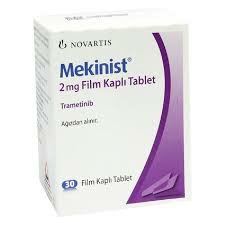
In addition to drug adjustment, dynamic monitoring and genetic testing are equally critical in drug resistance management. Detection of resistance mutations through liquid biopsy or tissue biopsy can help doctors understand the mechanisms of resistance and develop individualized treatment plans. For example, when testing detects NRAS or MEK mutations, you can consider adding a more downstream ERK inhibitor; If BRAFamplification is found, it may be necessary to intensify BRAF blocking or replace other BRAF targeted drugs. In addition, the use of ctDNA dynamic monitoring can evaluate treatment response and resistance progression in real time, providing a basis for subsequent treatment.
In clinical practice, in addition to drug regimens, the full management of patients is also very important. After trametinib resistance, the tumor may become more aggressive or metastatic, so patients need to be followed closely and undergo regular imaging review and laboratory testing. Doctors usually recommend continuing trametinib treatment to delay comprehensive resistance when the disease progresses locally but remains under control; when the disease progresses significantly or symptoms worsen, the treatment plan needs to be adjusted in a timely manner. Supportive treatments such as nutritional improvement, anti-inflammatory management, and maintaining good liver and kidney functions can also help improve the tolerance and efficacy of treatment after drug resistance.
In recent years, researchers are exploring new strategies to overcome or delay trametinib resistance. For example, through intermittent drug administration (drug holiday), tumor cells can regain their sensitivity to drugs in a drug-free environment; or through nano-delivery systems, drug concentrations can be precisely controlled to reduce cellular adaptive responses. In addition, new dual-target inhibitors, combination immune regimens and personalized precision therapies are also making positive progress in clinical trials. These strategies are expected to significantly extend the effective use period of trametinib in the future.
Overall, the problem of trametinib resistance is a challenge that cannot be ignored in targeted therapy. Most patients may develop drug resistance between half a year and a year and a half, but through reasonable combination regimens, molecular testing and dynamic management, the progression of drug resistance can be significantly delayed and survival prognosis improved. In the face of drug resistance, patients should not stop taking or change drugs on their own, but should receive systematic assessment and individualized adjustments under the guidance of oncologists. In the future, with the further development of precision medicine and multi-target combination strategies, the long-term efficacy of trametinib is expected to be further improved, bringing sustained clinical benefits to more cancer patients.
Reference materials:https://www.drugs.com/
[ 免责声明 ] 本页面内容来自公开渠道(如FDA官网、Drugs官网、原研药厂官网等),仅供持有医疗专业资质的人员用于医学药学研究参考,不构成任何治疗建议或药品推荐。所涉药品可能未在中国大陆获批上市,不适用于中国境内销售和使用。如需治疗,请咨询正规医疗机构。本站不提供药品销售或代购服务。


