
.jpeg)
Analysis of the efficacy of vorasidenib-VORANIGO and its clinical efficacy in patients with different indications
Vorasidenib (Vorasidenib) is an oral small molecule targeted inhibitor that mainly acts on tumors with IDH1 and IDH2 (isocitrate dehydrogenase 1/2) mutations. IDH1/2Gene mutations occur in a variety of tumor types, including gliomas (especially low-grade gliomas), acute myeloid leukemia (AML) and other rare solid tumors. Such mutations can lead to abnormal accumulation of 2-hydroxyglutarate (2-HG), thereby interfering with cell differentiation and promoting tumorigenesis. Vorsidenib selectively inhibits IDH1/2 mutant enzyme activity, reduces 2-HG levels, restores the differentiation ability of tumor cells, and thereby inhibits tumor growth.
Vorsidenib showed significant efficacy in patients with low-grade glioma. Clinical trials (such as the INDIGO study) have shown that for patients with relapsed or refractory low-grade glioma with IDH1/2 mutations, vorsidenib can significantly prolong progression-free survival (PFS) and reduce tumor growth rate. Studies have shown that vorsidenib can delay the increase in tumor size while improving patients' neurological function and quality of life. Vorsidenib was shown to be well tolerated and had a low rate of serious adverse events during long-term follow-up, making it an important treatment option for patients with IDHmutated low-grade gliomas.
Vorsidenib also shows potential efficacy in patients with acute myeloid leukemia (AML). AMLThe IDH mutation causes the differentiation of leukemia cells to be blocked. Voxiranib inhibits the IDH1/2 mutation activity, restores the differentiation ability of leukemia cells, reduces the level of 2-HG, thereby improving the bone marrow hematopoietic function. In single-agent or combined chemotherapy regimens, vorsidenib can induce remission in some patients, improve the complete remission rate (CR) and the duration of remission, and provide a new treatment approach for high-risk and relapsed AML patients. Clinical observations also show that it is safe for elderly patients or patients who are intolerant to intensive chemotherapy, and can be used as a treatment option for patients with poor tolerance.
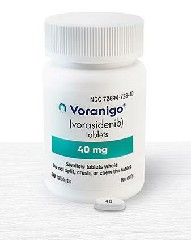
The safety and tolerability of vorsidenib also have significant advantages. Common adverse reactions include fatigue, gastrointestinal discomfort, mild hematological abnormalities and elevated liver enzymes, and most are controllable mild to moderate events. Compared with traditional chemotherapy drugs or non-selective targeted drugs, vorsidenib shows a lower risk of toxic side effects in long-term oral administration. In addition, vorsidenib has stable pharmacokinetics and good oral bioavailability, and can be taken once a day to facilitate long-term maintenance treatment for patients. Patients need to regularly monitor hematological indicators, liver and kidney functions, and changes in 2-HG levels during use to evaluate efficacy and safety.
Voxirinib also has different treatment strategies for patients with different indications. For patients with low-grade glioma, single-agent long-term maintenance therapy is often used to delay tumor progression and improve quality of life; for AML patients, a single-agent or combination chemotherapy regimen can be selected based on the patient's risk assessment and chemotherapy tolerance to improve the response rate and survival. In addition, for other rare IDH mutated solid tumors, clinical research on vorsidenib is still ongoing. Early data shows that it has potential efficacy in some patients with solid tumors, but more data are still needed to verify it.
Voxirinib, as a selective IDH1/2 mutation inhibitor, restores cell differentiation by blocking abnormal 2-HG accumulation, showing significant efficacy in patients with low-grade glioma and AML. Its advantages include clear targeting, convenient oral administration, good long-term tolerance, and individualized treatment plans can be formulated according to the conditions and indications of different patients. The launch of vorsidenib provides a new targeted treatment option for patients with IDH mutation-related tumors, and also provides an important reference for future precision medicine and molecular targeting strategies.
Reference materials:https://www.drugs.com/
[ 免责声明 ] 本页面内容来自公开渠道(如FDA官网、Drugs官网、原研药厂官网等),仅供持有医疗专业资质的人员用于医学药学研究参考,不构成任何治疗建议或药品推荐。所涉药品可能未在中国大陆获批上市,不适用于中国境内销售和使用。如需治疗,请咨询正规医疗机构。本站不提供药品销售或代购服务。


