
.jpeg)
How long should you take Giritinib (Segatan) and how to monitor its efficacy?
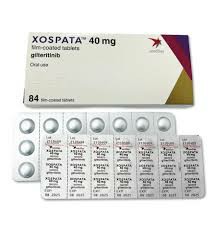
Gilitinib is an oral FLT3 inhibitor, mainly used to treat patients with relapsed or refractory acute myeloid leukemia (AML) carrying FLT3 mutations. Its mechanism of action is to inhibit the activity of FLT3 kinase and block abnormal signaling of tumor cells, thereby inhibiting the proliferation of leukemia cells and inducing apoptosis. Treatment with giritinib is usually a mid- to long-term process, and the length of treatment must be comprehensively judged by the doctor based on the patient's condition, treatment response, and adverse reactions.
Under normal circumstances, gilitinib is taken orally once daily as the standard treatment regimen, and the recommended dose is120mg. Patients should continue to take the medication until the disease progresses significantly, intolerable toxicity occurs, or the doctor considers that the medication can be discontinued. In some patients, treatment cycles may last several months or even more than a year. Clinical data shows that initial hematological improvement can be observed after continuous use for about 8 weeks, and significant effects usually require maintenance treatment for more than 12 weeks. If a patient does not experience an effect after 12 weeks but tolerates it well, the doctor may recommend continuing treatment for a period of time to assess the long-term response.
In terms of efficacy monitoring, it is mainly evaluated through peripheral blood imaging, bone marrow examination and molecular biology testing. Doctors will regularly test hemoglobin, white blood cell and platelet counts to determine the recovery of the bone marrow; at the same time, the changes in the proportion of leukemia cells will be determined through bone marrow cytology examination, and residual disease (MRD) will be monitored in combination with FLT3 mutation levels. If the blood picture gradually stabilizes, the proportion of bone marrow blast cells decreases, and the FLT3 mutation signal weakens, it means that the drug is working well. For some patients, imaging or biochemical indicators will also be used to assist in the evaluation of efficacy and organ function.
It should be noted that giritinib is a long-term targeted therapy, and efficacy monitoring should be carried out in parallel with adverse reaction management. Liver function, electrocardiogram and electrolyte levels need to be tested regularly during medication to prevent side effects such as prolonged QT interval or elevated liver enzymes. If serious adverse reactions occur, the drug should be temporarily discontinued or the dose should be adjusted under the guidance of a doctor. Patients should strictly abide by medical instructions and maintain regular medication and follow-up visits to ensure the best balance between efficacy and safety, so as to achieve long-term survival benefits.
Reference materials:https://www.drugs.com/
[ 免责声明 ] 本页面内容来自公开渠道(如FDA官网、Drugs官网、原研药厂官网等),仅供持有医疗专业资质的人员用于医学药学研究参考,不构成任何治疗建议或药品推荐。所涉药品可能未在中国大陆获批上市,不适用于中国境内销售和使用。如需治疗,请咨询正规医疗机构。本站不提供药品销售或代购服务。


