
.jpeg)
Imvarumab/FLOT enhances OS in resectable gastric cancer
Based on results from the Phase 3 MATTERHORN trial (NCT04592913) published in 2025, durvalumab/Durvalumab combination compared with placebo plus FLOT span>5-Fluorouracil-leucovorin-oxalate-docetaxel (FLOT) significantly improves overall survival (OS) in patients with resectable gastric or gastroesophageal junction (G/GEJ) adenocarcinoma, regardless of pathological status.
With September 2025 as the data cutoff date, the final overall survival analysis of the intention-to-treat population showed that comparing the study group and the control group, the hazard ratio (HR) was 0.78 (95% CI, 0.63-0.96; P=0.021), and neither group reached the median OS. Overall survival results from the MATTERHORN study strongly support the use of imrvalumab plus FLOT chemotherapy as a new global standard of care for patients with localized [resectable G/GEJ] adenocarcinoma.
Furthermore, survival analyzes stratified by demographic and clinical characteristics showed that OS improvements were consistent across most key subgroups. Notably, similar improvements in OS were achieved regardless of PD-L1 status. Among patients who were PD-L1 positive (PD-L1 TAP ≥ 1%), the HR was 0.79 (95% CI, 0.63-0.99), and those who were PD-L1 negative (PD-L1-TAP < 1%) had an HR of 0.77 (95% CI 0.41-1.50), even showing the same HR in each group.
Additional findings reported include an improvement in event-free survival (EFS), the study's primary endpoint, in patients with any degree of pathological response regardless of pathological node status at the December 2024 data cutoff.
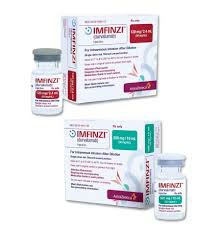
What were the study design and patient characteristics?
The phase 3 MATTERHORN trial is a global randomized, double-blind, placebo-controlled study evaluating the efficacy of the neoadjuvant durvalumab combined with FLOT chemotherapy. 2The study's primary endpoint is EFS; key secondary endpoints include OS and pathological complete response (pCR).
The study population consists ofComposed of 948 patients with localized G/GEJ adenocarcinoma who had not received treatment at enrollment. Patients are from Asia, Europe, North and South America; notably, 20% of patients are from Asia. Patients were stratified according to geographic region, clinical nodal status, and PD-L1 expression.
On treatment, patients were randomized 1:1 to receive the combination of imrvalumab and FLOT or placebo plus FLOT in the neoadjuvant setting (n=474, two arms). Here, patients received 1500 mg of the indicated treatment plus FLOT for 2 cycles before undergoing surgical resection 4 to 8 weeks after the last dose. 3 After recovery from surgical resection, patients received 1500 mg of durvalumab or placebo as adjuvant therapy for up to 1 year.
What trial data have been previously reported?
In 2023, interim results with a data cutoff of February 2023 showed that pCR and near-pCR were clinically significant, with response rates of 27% and 14% in the study and control groups, respectively. Next, in early 2025, a primary endpoint analysis was published showing that the 2-year EFS rate was 67.4% in the study group and 58.5% in the control group. 5 Both reports described a consistent and controllable safety profile between the two groups.
Based on the favorable efficacy and safety trends observed in previous analyses, this latest study result highlights the potential of durvalumab andFLOT to become new perioperative treatment options for patients.
Reference materials:https://www.oncnursingnews.com/view/durvalumab-flot-boosts-os-in-resectable-gastric-cancer
[ 免责声明 ] 本页面内容来自公开渠道(如FDA官网、Drugs官网、原研药厂官网等),仅供持有医疗专业资质的人员用于医学药学研究参考,不构成任何治疗建议或药品推荐。所涉药品可能未在中国大陆获批上市,不适用于中国境内销售和使用。如需治疗,请咨询正规医疗机构。本站不提供药品销售或代购服务。


