
.jpeg)
Comparison of the differences between everolimus/Afinitor and sirolimus
Everolimus and Sirolimus are both mTOR pathway inhibitors and are structurally derived from rapamycin derivatives, so they have long been regarded as "drugs in the same family". However, as their application in different disease areas around the world continues to deepen, they have shown significant differences in molecular modifications, action characteristics, clinical uses, long-term management strategies, and pharmacokinetics. For people in China who are concerned about tumors, immune diseases, transplant medicine, and rare diseases, accurately distinguishing the attributes of the two will help understand why doctors choose different drugs in different disease situations, and will also help patients more clearly judge the logic of treatment.
From a molecular structure perspective, everolimus adds a hydroxyethyl chain to the basic structure of sirolimus, making it have better oral bioavailability and faster steady-state achievement. This subtle structural difference enables everolimus to exhibit a relatively stable and predictable absorption pattern in the body, making it more suitable for long-term, fixed-dose oral medication regimens. The original structure of Sirolimus is more sensitive to lipid solubility and absorption pathways, and its blood concentration fluctuates within a wider range. Therefore, it is mostly used internationally in the field of transplant rejection where blood concentration needs to be closely monitored. It is this structural difference that has led the two to different clinical positionings from the early stages of research and development.
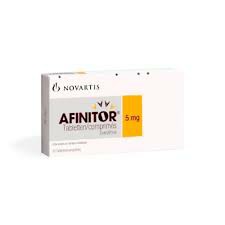
In terms of mechanism of action, both of them focus on inhibiting mTORC1 mTORC1, but Everolimus has shown a faster tissue distribution speed in multiple overseas studies, making it more suitable for the management of the course of solid tumors. Sirolimus is more of a basic drug with immunomodulatory properties. It is often used to maintain immune balance after organ transplantation, and is also used for some skin diseases, lymphatic malformations and other diseases. Everolimus has been further expanded to breast cancer , renal cell carcinoma, pancreatic neuroendocrine tumors, non-functional gastrointestinal or pulmonary origin NET, and tuberous sclerosis-related multisystem lesions, so it has formed a clear positioning in international cancer guidelines.
Another important difference is the difference in"tumor treatment properties" between the two. Everolimus Because of its better tissue penetration performance, it is especially suitable for metabolism-dependent tumors, such as HR-positive breast cancer, NET and some indolent tumors, emphasizing long-term control of the disease course and delaying progression. In contrast, Sirolimus, as a drug with more basic immunosuppressive properties, has a narrow scope of use in the field of oncology and is mostly used for research exploration or cases targeting specific genetic pathways. Although both are mTOR inhibitors, Everolimus is closer to "targeted drugs for solid tumors", while Sirolimus is closer to "immunomodulatory drugs".
In the treatment of rare diseases, the two also present completely different application paths. Everolimus is listed as an important treatment option by international guidelines in TSC-related diseases (such as SEGA, TSC-AML) due to its stable inhibition of cell metabolism and growth signals, while Sirolimus is more used for diseases such as vascular malformations and lymphatic malformations that require immune balance and cell proliferation control. In terms of treatment logic, everolimus puts more emphasis on "inhibiting lesion growth", while Sirolimus puts more emphasis on "regulating immunity and abnormal proliferation." Although the two may be used interchangeably for some diseases, their functions are not exactly the same.
Taken together, the differences between everolimus and sirolimus are reflected in many aspects such as structure, mechanism focus, indication layout, pharmacokinetic characteristics and treatment strategies. Everolimus is more "oriented towards tumors and rare diseases", while sirolimus is more "oriented towards immune regulation and transplantation medicine". Understanding the differences between the two can help patients better understand the goals and strategies of their treatment, and also provide a clearer basis for drug selection for clinical precision treatment.
Reference materials:https://www.drugs.com/everolimus.html
[ 免责声明 ] 本页面内容来自公开渠道(如FDA官网、Drugs官网、原研药厂官网等),仅供持有医疗专业资质的人员用于医学药学研究参考,不构成任何治疗建议或药品推荐。所涉药品可能未在中国大陆获批上市,不适用于中国境内销售和使用。如需治疗,请咨询正规医疗机构。本站不提供药品销售或代购服务。


