
.jpeg)
Bimekizumab instructions and medication precautions
1. Drug name
Generic name: bimezumab, bimezumab, bimezumab, bimezumab
English name:Bimekizumab
Product name:Bimzelx, Bimzelx
Pharmacological category: dual targetIL-17A/IL-17F inhibitor, humanized IgG1 monoclonal antibody
Bicizumab is a new biological agent that targets immune-mediated inflammatory diseases by simultaneously blocking interleukinsIL-17A and IL-17F, reducing the inflammatory response and the release of pro-inflammatory cytokines, thereby improving skin and joint lesions. The drug has been approved in many countries around the world for the treatment of moderate to severe psoriasis and some autoimmune diseases.
2. Indications
Bimekizumab (Bimekizumab) is suitable for the following patients:
1. Moderate to severe plaque psoriasis (Psoriasis): Adult patients who require systemic treatment or phototherapy.
2. Psoriatic arthritis (PsA): adult patients with active arthritis.
3. Nonradiographic axial spondyloarthritis (nr-axSpA): adult patients with objective indicators of inflammation.
4. Ankylosing spondylitis (AS): active adult patients.
5. Moderate to severe hidradenitis suppurativa (HS): Adult patients are characterized by repeated subcutaneous nodules and fistula formation.
The dual-target mechanism makes bicizumab potentially widely used in a variety of immune-mediated diseases. It can not only improve skin symptoms, but also relieve joint and systemic inflammation.
3. Usage and dosage
1. Preparation before treatment: Before using bichizumab, the risk of tuberculosis infection should be assessed, and liver enzymes, alkaline phosphatase and bilirubin should be tested. Complete age-appropriate vaccinations according to immunization guidelines to reduce potential risk of infection.
2. Recommended dosage
1) Plaque psoriasis:320 mg is injected subcutaneously at 0, 4, 8, 12, and 16 weeks (two injections of 160 mg each time), and then every 8 weeks. For those weighing ≥120kg, the injection can be changed to 320mg every 4 weeks after the 16th week.
2) Psoriatic arthritis: 160 mg subcutaneously every 4 weeks; if you also suffer from moderate to severe plaque psoriasis, use the plaque psoriasis protocol.
3) Non-radiological axial spondylitis and ankylosing spondylitis: 160 mg subcutaneously every 4 weeks.
4) Hidradenitis suppurativa: Induction periodInject 320 mg subcutaneously at 0, 2, 4, 6, 8, 10, 12, 14, and 16 weeks, and then every 4 weeks.
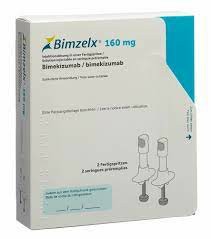
3. Medication preparation
Remove the carton from the refrigerator before injection and let it sit at room temperature for 30–45 minutes. It is not necessary to remove the prefilled syringe or autoinjector to avoid light exposure. Check whether the solution is transparent to slightly milky white, without particles or discoloration. If any abnormality is found, do not use it.
4. Medication Management
Medicine use must be carried out under the guidance of medical professionals. After training, patients can inject themselves. Before each dose of injection, two injections of 160mg each should be given in different parts of the thigh, abdomen or back of the upper arm. Avoid injecting within 2 inches of the belly button, areas with damaged skin, or active psoriasis. Syringes and auto-injectors are single-use and must be discarded after use.
4. Adverse reactions
Common adverse reactions include:
Upper respiratory tract infection, oral candidiasis, ringworm infection, herpes simplex infection;
Injection site reactions, headache, gastroenteritis, acne, folliculitis;
Other candida infections and fatigue;
Rare adverse events such as suicidal ideation, liver biochemical abnormalities, and inflammatory bowel disease have also been observed in clinical studies and require close monitoring.
5. Storage
RefrigerateStore at 2–8°C (36–46°F) in the original carton, away from light.
Do not freeze or shake, unused portion must be discarded.
Available at room temperature Store at 25°C for 30 days, but cannot be returned to the refrigerator after storage. The date of removal must be marked.
6. Taboo
Contraindicated in patients with active severe infections, including active tuberculosis.
It is prohibited for those who are allergic to drug ingredients.
7. Mechanism of action
Bicizumab is a IgG1/κ humanized monoclonal antibody with dual antigen-binding regions that can selectively bind to IL-17A, IL-17F and IL-17AF heterodimers and inhibit their binding to the IL-17 receptor complex. The IL-17 pathway plays a key role in immune response and inflammation. The drug reduces skin and joint lesions by inhibiting the release of pro-inflammatory factors.
8. Precautions
Clinical studies have shown that suicidal ideation and behavior, infection, tuberculosis, liver function abnormalities, and inflammatory bowel disease may occur. In the event of serious adverse events, the drug should be discontinued, and the dose should be adjusted or permanently discontinued as appropriate. Patients should receive regular monitoring during treatment, including hematology, liver function and infection indicators.
Reference materials:https://www.drugs.com/bimekizumab.html
[ 免责声明 ] 本页面内容来自公开渠道(如FDA官网、Drugs官网、原研药厂官网等),仅供持有医疗专业资质的人员用于医学药学研究参考,不构成任何治疗建议或药品推荐。所涉药品可能未在中国大陆获批上市,不适用于中国境内销售和使用。如需治疗,请咨询正规医疗机构。本站不提供药品销售或代购服务。


