
.jpeg)
Mitotane’s mechanism for treating hypercortisolism
As a drug that has a selective effect on adrenocortical cells, Mitotane is used internationally not only for patients with inoperable functional or non-functioning adrenocortical carcinoma (ACC; adrenal carcinoma), but also for Cushing’s syndrome (Cushing’s syndrome) caused by excess cortisol. Its mechanism of action is not to directly inhibit a certain key enzyme in the traditional sense, but to achieve a sustained decrease in cortisol through "multi-pathway regulation", so it occupies a unique position in the global endocrinology field.
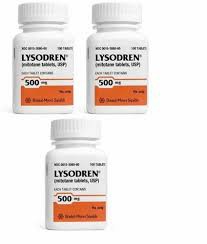
Mitotan selectively affects cells in the zona fasciculata and zona reticularis of the adrenal gland, gradually inactivating these areas responsible for secreting cortisol and androgens. The drug binds to the lipid structure in the adrenal cells and changes the function of intracellular steroid synthesis-related proteins, causing the production of cortisol to gradually decrease over time. Compared with drugs that generally inhibit a single enzyme, mitotane is more like a "source regulation", achieving long-term stable effects by overall reducing cell production capacity.
Mitotane can enhance the body's ability to metabolize and eliminate cortisol. Overseas studies have pointed out that mitotane can promote the inactivation of cortisol concentration by the liver, allowing it to be converted into metabolites faster and excreted from the body. Therefore, even if the early changes in endocrine gland production are not obvious in some patients, the effective cortisol levels in the body will still gradually decrease, thereby improving the multi-system symptoms caused by hormone excess, such as blood sugar fluctuations, muscle weakness, fat redistribution, and increased mental stress.
Mitotan can also reduce the sensitivity of the adrenal glands to ACTH (adrenocorticotropic hormone), that is, while ACTH is still stimulating, the adrenal glands respond to it attenuated, further reducing the synthesis of cortisol. This mechanism is particularly important in Cushing's syndrome, because patients often have long-term overactivity of the ACTH-cortisol axis, and the intervention of mitotane can reduce the effect of this feedback system from the reactive end.
Reference materials:https://go.drugbank.com/drugs/DB00648
[ 免责声明 ] 本页面内容来自公开渠道(如FDA官网、Drugs官网、原研药厂官网等),仅供持有医疗专业资质的人员用于医学药学研究参考,不构成任何治疗建议或药品推荐。所涉药品可能未在中国大陆获批上市,不适用于中国境内销售和使用。如需治疗,请咨询正规医疗机构。本站不提供药品销售或代购服务。


