
.jpeg)
How to deal with adagrasib (Krazati) resistance and analysis of common resistance mechanisms
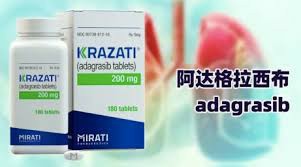
Adagrasiib (Krazati) is a new type of oral selective KRAS G12C inhibitor, mainly used to treat patients with unresectable or metastatic non-small cell lung cancer (NSCLC) carrying KRAS G12C mutations. In clinical application, although adagrasib shows a high initial response rate, some patients may still develop drug resistance after a period of treatment, which is a common challenge in targeted therapy. Drug resistance may not only lead to disease progression, but also affect patients' survival expectations. Therefore, understanding the drug resistance mechanisms and coping strategies is crucial for clinical management.
The mechanisms of resistance to adagrasib mainly include reactivation of the KRAS signaling pathway in tumor cells, alternative activation of downstream pathways, and expansion of mutant clones. Specifically, some tumor cells may achieve resistance to drugs by acquiring secondary KRAS mutations or activation of other Ras family members. In addition, bypass activation of downstream pathways such as MAPK or PI3K-AKT pathways will also weaken the anti-tumor effect of adagrasib, allowing tumor cells to escape drug inhibition. Mechanisms external to the target, such as epithelial-mesenchymal transition (EMT) and tumor microenvironmental changes, may also play a role in the development of drug resistance.
When patients develop resistance to adagrasiib, a variety of clinical response strategies can be adopted. First, reexamination and genetic testing are needed to clarify the resistance mechanism and changes in tumor mutation spectrum. This process can help doctors evaluate whether there are new KRAS mutations, alternative pathway activation or other mutational drivers, and provide a basis for subsequent treatment decisions. Secondly, for some patients with accessory pathway activation, the combined use of downstream signaling pathway inhibitors, such as MEK inhibitors or PI3K inhibitors, may be considered to enhance the therapeutic effect and delay disease progression.
In addition to targeted combination therapy, chemotherapy or immunotherapy are also commonly used alternatives after drug resistance. For patients who have not received immune checkpoint inhibitors in the past, combined treatment with PD-1 or PD-L1 inhibitors can be considered to achieve clinical remission. At the same time, for patients with high mutation burden or rapid progression, conventional chemotherapy still has certain efficacy and can be used as a means of short-term tumor control. The formulation of individualized treatment plans needs to take into account the patient's previous treatment history, physical condition, and type of drug-resistant mutations.
In addition, clinical trials also provide new options for adagrasiib-resistant patients. Currently, a number of studies on the resistance mechanism of KRAS G12C are ongoing, including new generation KRAS inhibitors, combination targeting programs and multi-target small molecule drugs. Participating in these clinical trials can not only provide patients with the latest treatments, but also help scientists further understand the mechanisms of drug resistance, thereby promoting subsequent drug development and clinical optimization.
Finally, drug resistance management is not only a matter of drug selection, but also involves the patient's full monitoring and life management. During the drug resistance period, imaging evaluation and tumor marker monitoring should be performed regularly, while attention should be paid to drug side effects and patient quality of life. Multidisciplinary teamwork, including oncology, molecular pathology and pharmacy departments, can provide patients with more precise treatment options. Through a comprehensive strategy, patients can still obtain effective disease control and quality of life protection when facing resistance to adagrasiib.
Reference materials:https://www.drugs.com/
[ 免责声明 ] 本页面内容来自公开渠道(如FDA官网、Drugs官网、原研药厂官网等),仅供持有医疗专业资质的人员用于医学药学研究参考,不构成任何治疗建议或药品推荐。所涉药品可能未在中国大陆获批上市,不适用于中国境内销售和使用。如需治疗,请咨询正规医疗机构。本站不提供药品销售或代购服务。


