
.jpeg)
Imvarumab/carboplatin/etoposide proven tolerable in ES-SCLC
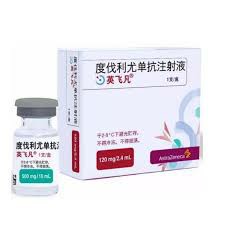
Based on published results from a single-arm phase 2 trial (jRCTs031200319), treatment with durvalumab/Infinifer, carboplatin, and etoposide was tolerable and had good efficacy in the first-line treatment of patients with untreated extended-stage small cell lung cancer (ES-SCLC).
The study's primary endpoint was met,67% (80% CI, 55.2%-76.7%; P<.0001) of patients with an ECOG performance status of 2 completed four cycles of induction therapy, compared with 50% (80% CII, 26.7%-73.3%; P=.0088) of patients with an ECOG performance status of 3.
The objective response rate in the full analysis set as determined by central review was 50.9% (95% CI, 36.8%-64.9%), with response rates of 52.4% (95% CI, 36.4%-68.0%) in patients with ECOG performance status 2 and 45.5% (95% CI -16.8%-76.6%) in patients with ECOG performance status 3. The disease control rates were 75.5% (95%CI, 61.7%-86.2%), 78.6% (95CI, 63.2%-89.7%) and 63.6% (95%CI, 30.8%-89.1%) respectively.
Overall, median progression-free survival was 4.7 months (95% CI, 3.9-5.9), 4.8 months (95% CI, 3.8-6.2) for patients with ECOG performance status 2, and 4.6 months (95% CI, 1.5-8.6) for patients with ECOC performance status 3.
After a median follow-up of 23.5 months (IQR, 13.1-25.4), median overall survival (OS) was 9.0 months overall (95% CI, 5.1 -14.1), 11.3 months (95% CI, 6.7-16.1) for patients with ECOG performance status 2, and 5.1 months (95% CI, 2.2-8.6) for patients with ECO performance status 3. The 1-year survival rates were 43.4% (95% CI, 34.1%-53.1%), 50.0% (95% CI, 39.1%-60.9%) and 18.2% (95% CI, 5.0%-41.5%) respectively.
Performance status improved overall in 55% (95% CI, 40.5%-68.4%) of patients, including 57% (95% CI, 41.0%-72.3%) of patients with ECOC performance status 2 and 46% (95% CI, 16.8%-76.6%) of patients with ECOC performance status 3. Post hoc exploratory analysis showed that the median OS of patients who completed induction therapy was 15.0 months, while the median OS of patients who did not complete induction therapy was 3.8 months (P<0.0001). Patients with a Charlson Comorbidity Index score of 1 or higher also had significantly shorter OS than those with a score of 1 (P=0.012). The analysis also found that gender, liver metastasis, Charlson comorbidity index score and neutrophil-to-lymphocyte ratio were predictive factors for OS.
This study demonstrates that immune checkpoint inhibitors combined with chemotherapy are tolerable in patients with underperforming extensive-stage SCLC, showing favorable 1-year survival rates and supports the integration of immune checkpoint inhibitors in this therapeutically challenging population. A total of 57 patients with untreated, histologically or cytologically confirmed ES-SCLC who were not candidates for curative surgery or chemoradiotherapy were enrolled in the trial. Additionally, patients had an ECOG performance status of 2 or 3, age 70 years or older, measurable disease according to RECIST v1.1, and adequate organ function.
It is worth noting that 49 patients were included in the per-protocol set, including 39 patients in Group 2 in the ECOG performance status and 10 patients in Group 3 in the ECO performance status. During the induction phase, treatment consisted of carboplatin on day 1, etoposide on days 1 to 3, and durvalumab 1500 mg intravenously on day 1 every 3 to 4 weeks. Subsequently, patients received durvalumab 1500 mg every 4 weeks until disease progression or unacceptable toxicity.
The primary endpoint of the trial was tolerability, defined as the proportion of patients who completed 4 cycles of durvalumab, carboplatin, and etoposide during the induction phase. Secondary endpoints included 1-year survival, independent review committee progression-free survival, overall survival, objective response rate, performance status improvement rate, and safety.
Regarding safety, all patients experienced treatment-related adverse events of any grade, with 93% experiencing grade 3 or higher adverse events, with 93% in Group 2 in ECOG performance status and 92% in Group 3 in ECOG functional status. The most common grade 3 or higher adverse events were neutropenia, decreased white blood cell count, decreased lymphocyte count, hyponatremia, and febrile neutropenia.
Reference materials:https://www.cancernetwork.com/view/durvalumab-carboplatin-etoposide-prove-tolerable-in-es-sclc
[ 免责声明 ] 本页面内容来自公开渠道(如FDA官网、Drugs官网、原研药厂官网等),仅供持有医疗专业资质的人员用于医学药学研究参考,不构成任何治疗建议或药品推荐。所涉药品可能未在中国大陆获批上市,不适用于中国境内销售和使用。如需治疗,请咨询正规医疗机构。本站不提供药品销售或代购服务。


