
.jpeg)
EMA approves cemiplimab as adjuvant treatment for metastatic colorectal cancer with high risk of recurrence
EMA has approved the adjuvant Cemiplimab (Cemiplimab) -Libtayo for the treatment of adults at high risk of recurrence after surgery and radiation therapy
Both approvals were supported by data from the landmark Phase 3 C-POST trial (NCT03969004), which evaluated disease-free survival (DFS) in patients with high-risk CSCC who received cimepilimab versus placebo.
In C-POST, the median potential follow-up time from random assignment to data cutoff was 24 months (range 2-64). Cimepilimab treatment significantly improved DFS compared with placebo, with 24 events and 65 events (HR , 0.32; 95%CI, 0.20-0.51; P<0.001). The estimate of 24 months DFS is 87.1% (95%CI, 80.3%-91.6%), The 24 month DFS estimate is 64.1% (95%CI, 55.9%-71.1%).
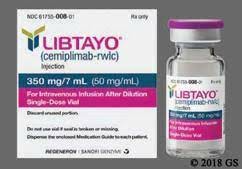
A DFS benefit was observed with cimepilimab compared with placebo in all prespecified subgroups. These include patients from North America (HR,0.18; 95%CI, 0.05-0.63), patients with high-risk category non-modal status (HR0.27; 95%CI0.13- 0.56) and patients with a PD-L1 tumor proportion score of 1% or higher (HR0.28; 95%CI-0.15-0.52). The local recurrence-free rate at 24 months was estimated to be 94.6% (95% CI, 95% CI, < span>89.1%-97.3%), local recurrence occurred in 9 and 40 patients respectively (HR, 0.20; 95%CI, 0.09-0.40). At 24 months, the estimated distant recurrence-free rate was 94.3% (95% CI, 89.0%-97.1%) with cimepilimab compared with 83.8% (95% CI, < span>76.3%-89.0%); 10 and 26 patients experienced distant recurrence (HR, 0.35; 95%CI, 0.17-0.72).
Of 46 patients who started on placebo but received cimelimab due to relapse, 43% had an objective radiographic response. 2-year overall survival rate (OS) was 94.8% (95%CI, 89.6%-97.4%), which was
Although CSCCIt is usually successfully treated with surgery and radiation therapy, but some patients face the ongoing threat of disease recurrence with potentially fatal consequences. This highlights the urgent need for early intervention, but immunotherapy has so far been limited to advanced cases.
A total of 415 patients with CSCC at high risk of recurrence were randomly assigned to receive adjuvant cimepilimab (n=209) or placebo (n=206). Initially, treatment consisted of 350 mg of cimepilimab intravenously every 3 weeks or placebo; however, a protocol amendment changed the treatment regimen to 350 mg of cimepilimab intravenously every 3 weeks for 12 weeks, then 700 mg of cimepilimab intravenously every 6 weeks for 36 weeks, or placebo every 3 weeks for 12 weeks and then every 6 weeks. In the second part of the trial, patients who experienced disease recurrence in either group were given the option to receive subsequent cimepilimab treatment.
Eligible patients were 18 years of age or older, had localized or regional CSCC, and completed curative surgery within 2 to 10 weeks of randomization, macroscopic gross resection of all disease, and postoperative radiation therapy with a bioequivalent dose of at least 50 Gy.
The primary endpoint of the trial was DFS. Secondary endpoints included freedom from local recurrence, freedom from distant recurrence, OS, second primary CSCC tumors, and safety.
Regarding safety, adverse events (AE) of any grade or cause occurred in 91.2% of the cimepilimab group and 89.2% of the placebo group. The most common adverse events across groups were fatigue, pruritus, rash, and diarrhea. Adverse events of grade 3 or higher due to any cause occurred in 23.9% and 14.2%, respectively, while adverse events of grade 3 or higher believed to be treatment-related occurred in 9.8%.
Immune-related adverse events of any grade occurred in 22.9% of the semelumab group and 6.4% of the placebo group, with 7.3% of grade 3 or higher occurring in the semiliumab group compared with 0% of the placebo group. Cimepilimab group9.8% and 1.5% of patients in the placebo group discontinued treatment.
References: https://www.cancernetwork.com/view/ec-approves-adjuvant-cemiplimab-in-cscc-at-high-risk-of-recurrence
[ 免责声明 ] 本页面内容来自公开渠道(如FDA官网、Drugs官网、原研药厂官网等),仅供持有医疗专业资质的人员用于医学药学研究参考,不构成任何治疗建议或药品推荐。所涉药品可能未在中国大陆获批上市,不适用于中国境内销售和使用。如需治疗,请咨询正规医疗机构。本站不提供药品销售或代购服务。


