
.jpeg)
A safety study on whether trametinib (Megenin) can be used in combination with chemotherapy drugs
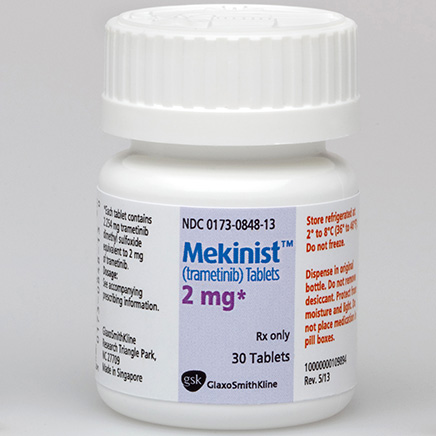
Trametinib (Trametinib) is an oral selective MEK1/2 inhibitor, mainly used to treat advanced or metastatic melanoma carrying BRAF V600 mutations, non-small cell lung cancer (NSCLC) and other related malignant tumors. Its mechanism of action is by inhibiting the MAPK/ERK signaling pathway, thereby blocking tumor cell proliferation and survival. The use of trametinib as a single agent has been proven to prolong progression-free survival (PFS). However, the problem of tumor resistance and limited efficacy have prompted clinical studies to explore its potential in combination with chemotherapy drugs.
Trametinib, as a targeted drug, can enhance the sensitivity of tumor cells to chemotherapy drugs by inhibiting tumor signaling pathways. For example, in melanoma and NSCLC models, trametinib can induce tumor cell cycle arrest and apoptosis, thereby forming a synergistic effect with DNA-damaging chemotherapy drugs such as cisplatin, paclitaxel or doxorubicin. Theoretically, targeted inhibition of the MAPK pathway can reduce tumor drug resistance and enable chemotherapy drugs to still exert their killing effect at low doses, which may improve efficacy and reduce toxic burden.
There are currently a number of early-stage clinical trials evaluating the safety of trametinib combined with chemotherapy. In these studies, trametinib was typically used at a standard oral dose (e.g., 2 mg once daily) in combination with conventional chemotherapy drugs. Research results show:
1.Types of adverse reactions: Common ones include rash, diarrhea, fatigue and mild to moderate liver function abnormalities, as well as chemotherapy-specific adverse reactions, such as bone marrow suppression (neutropenia, anemia), nausea, vomiting and hair loss.
2.Serious adverse events (Grade 3–4): Combination medication may increase the risk of hematological toxicity. Some patients experience moderate to severe neutropenia or thrombocytopenia, but this can usually be recovered through dose adjustment or short-term discontinuation.
3.Cardiovascular and skin toxicity: Trametinib alone may cause abnormal cardiac function or rash, but combination with chemotherapy does not significantly increase the incidence of serious cardiac events. However, cardiac function needs to be evaluated before treatment and monitored regularly during treatment.
Overall, the safety of combined medication is controllable, but individualized dose management and close monitoring need to be emphasized, especially hematological indicators, liver and kidney function, and cardiovascular status.
In order to ensure the safety of combination therapy, dose optimization and staged dosing strategies are usually adopted in clinical practice:
1.For trametinib, if rash or mild cardiac dysfunction occurs, the dose can be temporarily reduced to1.5 mg or administered intermittently;
2.For chemotherapy drugs, if severe bone marrow suppression occurs, the dosing interval can be extended or the dose can be reduced, and growth factors (such asG-CSF) can be used for support;
3. Emphasis is placed on assessing the patient's liver and kidney function and underlying diseases before treatment, dynamic monitoring during treatment, and timely adjustment of dosage or drug suspension to reduce the occurrence of serious adverse events.
Some clinical studies have shown that trametinib combined with chemotherapy can improve tumor response rate (ORR) and progression-free survival (PFS), especially in patients who are resistant to single-agent chemotherapy or BRAF V600 mutations. Combination medication can exert a synergistic effect between targeted drugs and chemotherapy drugs to improve the treatment response of some advanced patients, but the long-term efficacy and overall survival (OS) still need to be verified by larger-scale, randomized controlled studies.
Comprehensive research shows that the overall safety of trametinib combined with chemotherapy is controllable, but hematological toxicity, gastrointestinal reactions, and skin or cardiovascular adverse reactions still exist. Clinical management strategies include:
1.Strictly screen patients: assess heart, liver and kidney function, bone marrow reserves and underlying diseases;
2. Dynamic monitoring: review blood routine, liver and kidney function and electrocardiogram every cycle to detect adverse reactions in time;
3.Individualized adjustment: adjust the dosage of trametinib and chemotherapy drugs according to tolerance, and supplement with symptomatic and supportive treatment;
4.Patient education: Guide patients to identify early adverse reactions, such as fever, infection, rash and abnormal fatigue, and seek medical treatment in a timely manner.
Through scientific management and individualized strategies, trametinib combined with chemotherapy can exert a synergistic anti-tumor effect while ensuring maximum safety, providing a feasible treatment option for patients with advanced or drug-resistant tumors.
Reference materials:https://www.drugs.com/
[ 免责声明 ] 本页面内容来自公开渠道(如FDA官网、Drugs官网、原研药厂官网等),仅供持有医疗专业资质的人员用于医学药学研究参考,不构成任何治疗建议或药品推荐。所涉药品可能未在中国大陆获批上市,不适用于中国境内销售和使用。如需治疗,请咨询正规医疗机构。本站不提供药品销售或代购服务。


