
.jpeg)
Evaluation of the actual effectiveness of deuterated colexitinib (decavatinib) in the treatment of psoriasis
1. Drug Overview and Mechanism of Action
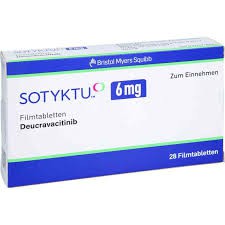
Deucravacitinib is a new oral small molecule selective TYK2 (tyrosine kinase 2) inhibitor, mainly used to treat adult patients with moderate to severe plaque psoriasis (Psoriasis vulgaris). It blocks the inflammatory response mediated by IL-12, IL-23 and IFN signaling pathways and reduces the abnormal activation of T cells and keratinocytes, thereby improving psoriasis skin lesions, reducing scales and erythema. Unlike traditional JAK inhibitors, deuterated colexitinib is highly selective and only targets TYK2 without affecting JA K1, JAK2 or JAK3, thereby maintaining efficacy while reducing the risk of side effects associated with systemic immunosuppression.
2. Clinical efficacy data
Deuterated colexitinib has shown excellent efficacy in the treatment of patients with moderate to severe plaque psoriasis in pivotal Phase III clinical trials such as POETYK PSO-1 and PSO-2. The study results show that at the end of the 16-week treatment course, approximately 58% to 60% of the patients achieved an>PASI75 (Psoriasis Area and Severity Index improvement 75%), significantly higher than the placebo group (approximately 12%). In addition, close to 35% to 40% of patients can achieve PASI90, that is, the psoriatic lesions are almost cleared. Clinical observation shows that with continued use for more than 24 weeks, the efficacy is further consolidated, and the improvement of skin lesions in some patients continues to be stable for 52 weeks.
3. Feedback from patients on actual use
In real-world settings, patient feedback on deuterated colexitinib has been generally positive. Most patients report significant reduction in skin itching, reduction in erythema and scale, and significant improvement in quality of life. At the same time, the oral administration method is convenient and does not require injection, which increases long-term compliance. Some patients experience mild headache, upper respiratory tract infection, or mild diarrhea in the early stages of treatment, but most of the symptoms are tolerable and do not require discontinuation of treatment. Overall, deuterated colexitinib has demonstrated high efficiency and safety characteristics consistent with clinical trials in practical applications.
4. Adverse reactions and safety
The incidence of adverse reactions with deuterated colexitinib is lower than that of traditional systemic treatments (such as cyclosporine or biological agents), and most of them are mild to moderate. Common adverse reactions include upper respiratory tract infection, headache, fatigue and mild elevation of blood lipids. Because the drug is highly selective and does not significantly suppress overall immune function, the incidence of serious infections, hematological abnormalities, or liver and kidney toxicity is low. It is clinically recommended that patients regularly monitor blood routine, liver and kidney function, and blood lipid levels during use to detect potential risks in a timely manner.
5. Comparison with other treatment options
Compared with traditional oral immunosuppressants, deuterated colexitinib has the advantages of long-lasting efficacy, convenient oral administration, and high compliance; compared with biological agents (such as IL-17 or IL-23 inhibitors), it does not require subcutaneous injection or cold chain storage and is more flexible to use. Although biological agents have slightly higher rates of PASI90 or PASI100 in some patients, deuterated colexitinib has competitive advantages in cost, safety and convenience of long-term management, providing a new oral treatment option for patients with moderate to severe psoriasis.
6. Clinical application and individualized strategies
Deuterated colexitinib is suitable for adult patients with moderate to severe plaque psoriasis, especially those who have an inadequate response to or are intolerant to traditional oral medications. In clinical use, individualized dosage and treatment plans should be formulated based on the severity of the disease, comorbidities, and previous treatment history, and the efficacy should be monitored using dermatological assessment tools (such as PASI, BSA, DLQI). In practical applications, some patients can be combined with local treatment or short-term phototherapy to accelerate the improvement of lesions and symptom relief.
Overall, deuterated colexitinib has demonstrated significant efficacy, high selectivity, oral convenience and good tolerability in the treatment of moderate to severe psoriasis. Both clinical trials and real-world data show that the drug can significantly improve skin lesions, relieve itching, and improve quality of life. It also has low adverse reactions and good long-term safety. As the first highly selective TYK2 inhibitor, deuterated colexitinib provides an important new oral treatment option for patients with moderate to severe psoriasis and provides a reliable basis for long-term management and personalized treatment strategies.
Reference materials:https://www.drugs.com/
[ 免责声明 ] 本页面内容来自公开渠道(如FDA官网、Drugs官网、原研药厂官网等),仅供持有医疗专业资质的人员用于医学药学研究参考,不构成任何治疗建议或药品推荐。所涉药品可能未在中国大陆获批上市,不适用于中国境内销售和使用。如需治疗,请咨询正规医疗机构。本站不提供药品销售或代购服务。


