
.jpeg)
Differences between cabergoline and bromocriptine in the treatment of prolactin abnormalities
Both cabergoline and bromocriptine are dopamine receptor agonists. They mainly inhibit dopamineD2 receptors by activating pituitary lactogen, inhibiting prolactin (PRL) secretion. They are used to treat hyperprolactinemia and related symptoms, such as menstrual disorders, infertility, galactorrhea and pituitary tumors. Both are commonly used drugs, but there are certain differences in structure, pharmacokinetics and clinical application.
Cabergoline is a long-acting oral drug with a half-life of about 65 hours. It can be taken 1–2 times a week. It has a fast onset of action and a relatively stable blood concentration. Bromocriptine is a short-acting oral drug that needs to be taken in divided doses every day. Its half-life is only about 12–14 hours. Due to the different dosing frequencies, cabergoline has advantages in patient compliance and convenience of life, while bromocriptine requires strict on-time medication to maintain efficacy.
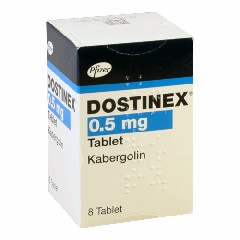
In clinical studies, cabergoline was more effective at lowering prolactin levels than bromocriptine, with higher complete remission rates and lower relapse rates. At the same time, cabergoline has a low incidence of adverse reactions, such as nausea, dizziness, and hypotension, and is well tolerated. Although bromocriptine has clear efficacy, it has obvious side effects, especially nausea, vomiting, headache and blood pressure fluctuations in the initial stage. It needs to be gradually increased to improve tolerance.
In the treatment of hyperprolactinemia, it is generally recommended to use cabergoline as the drug of choice, especially for patients with long-term management and high compliance requirements; for patients who cannot tolerate cabergoline or have price restrictions, bromocriptine can be used. Clinically, drug selection should be based on the patient's age, symptoms, comorbid diseases, and economic factors, while closely monitoring prolactin levels and changes in pituitary imaging to develop an individualized treatment plan.
Reference materials:https://www.drugs.com/
[ 免责声明 ] 本页面内容来自公开渠道(如FDA官网、Drugs官网、原研药厂官网等),仅供持有医疗专业资质的人员用于医学药学研究参考,不构成任何治疗建议或药品推荐。所涉药品可能未在中国大陆获批上市,不适用于中国境内销售和使用。如需治疗,请咨询正规医疗机构。本站不提供药品销售或代购服务。


