
.jpeg)
Riboxiclib maintains 5-year reduction in recurrence rates in HR+/HER2 early-stage breast cancer: the NATALE trial
For patients with stage II and stage III hormone receptor-positive/human epidermal growth factor receptor 2-negative (HR+/HER2) early-stage breast cancer (EBC), maintaining long-term treatment success often presents many challenges. For this population, continued research on new drugs and treatment options has brought new hope for extending disease-free survival time and improving long-term treatment effects.
At the conference in October 2025, Professor John P. Crown presented the results of the five-year efficacy analysis of the Phase 3 NATALE trial. The trial assessed whether adding the cyclin-dependent kinase (CDK) inhibitor Ribociclib to hormone therapy was more effective than a nonsteroidal aromatase inhibitor (NSAI) alone. The NATALEE trial was designed to include stage IIA, IIB, and III patients who were randomized into two groups: one group received adjuvant rebociclib plus an NSAI (letrozole or anastrozole), and the other group received only an NSAI. Of note, N0 patients with axillary lymph node metastasis (N1, 1-3 axillary lymph nodes) or other high-risk factors were also included in the study to ensure the broadness and representativeness of the trial.
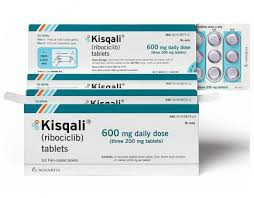
In terms of the specific dosing regimen, the dose of Riboxiclib is 400mg per day, with continuous treatment for three weeks and then one week of discontinuation, and the entire treatment cycle is as long as three years. Meanwhile, male and premenopausal female patients received the gonadotropin-releasing hormone (GnRH) agonist goserelin to control hormone levels in the body. The primary endpoint of this trial is invasive disease-free survival (iDFS), while secondary endpoints include distant disease-free survival (DDFS), distant recurrence-free survival (DRFS), and overall survival (OS).
According to the latest report, ribociclib combined with NSAI showed significant benefits in iDFS in all subgroups of patients. In the analysis of DDFS and DRFS, the results of the ribociclib + NSAI group were also better than those of NSAI alone. Specific data show that at three years, the iDFS rate of the Riboxil + NSAI group was 90.8%, while the NSAI alone group was 88.0%; at four years, the iDFS rates of the two groups were 88.3% and 81.0% respectively; at five years, the iDFS rate of the Riboxil + NSAI group remained at 85.5%, while the NSAI alone group was 81.0%. The corresponding absolute improvements are 2.7%, 4.4% and 4.5% respectively. These data indicate that the treatment regimen of ribociclib combined with NSAI has significant efficacy in patients with early-stage breast cancer.
AlthoughThe results of the NATALE trial show that Riboxiclib + NSAI has a certain improvement in disease-free survival, but the improvement in overall survival rate (OS) still requires further research and verification. Researchers will continue to pay attention to whether this combination treatment regimen can bring long-term DDFS, DRFS and OS benefits in subsequent follow-up, and further verify the potential of ribociclib combined with endocrine therapy in prolonging the survival of patients with HR+/HER2 early breast cancer. These findings provide new basis for clinical practice, may change the treatment strategy of early breast cancer, and improve the quality of life and survival time of patients.
In general,The five-year data of the NATALEE trial provides a new perspective on the treatment of HR+/HER2 early breast cancer, shows the potential advantages of ribociclib combined with NSAI, and reminds us that we should pay more attention to the application of new treatment options in future treatments.
References:https://www.docwirenews.com/post/ribociclib-sustains-recurrence-reduction-at-5-years-in-hr-her2-early-breast-cancer-natalee-trial
[ 免责声明 ] 本页面内容来自公开渠道(如FDA官网、Drugs官网、原研药厂官网等),仅供持有医疗专业资质的人员用于医学药学研究参考,不构成任何治疗建议或药品推荐。所涉药品可能未在中国大陆获批上市,不适用于中国境内销售和使用。如需治疗,请咨询正规医疗机构。本站不提供药品销售或代购服务。


