
.jpeg)
Cemiplimab gets reimbursement in seven provinces for non-small cell lung cancer basal cell carcinoma
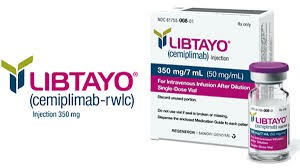
Cemiplimab (Cemiplimab) is reimbursed by public drug plans overseas for use in adults with advanced non-small cell lung cancer (NSCLC) and locally advanced basal cell carcinoma (BCC). The exact reimbursement indication for lung cancer specifies cimilimumab as monotherapy for the first-line treatment of adult patients with locally advanced or metastatic NSCLC, a PD-L1 Tumor Proportion Score (TPS) of 50% or greater, as determined by confirmatory testing, and the absence of EGFR, ALK, or ROS1 Abnormalities and not suitable for surgical resection or definitive chemoradiotherapy; and in combination with platinum-based chemotherapy for the first-line treatment of adult patients with locally advanced or metastatic non-small cell lung cancer whose tumors do not have EGFR, ALK or ROS1 abnormalities and who are not suitable for surgical resection or definitive chemoradiotherapy.
Non-small cell lung cancer is a devastating disease that affects many Canadians and their families. The availability of simipril provides an additional, much-needed treatment option for those with advanced disease. Reimbursement of cimipilimab for patients with advanced non-small cell lung cancer and locally advanced basal cell carcinoma is based on data from the Phase 3 trials of EMPOWER Lung 1 (NCT03088540) and EMPOWER Lung 3 (NCT03409614), respectively, and data from the Phase 2 trial of EMPOWER BCC 1 (NCT03132636).
1. What are the key data of EMPOWER Lung 1, EMPOWER Lung 3 and EMPOWER BCC 1?
EMPOWER Lung 1 evaluates advanced non-small cell lung cancer and PD-L1 Key findings for first-line cefliximab (n=357) versus investigator's choice of chemotherapy (n=355) in patients with TPS of 50% or greater demonstrate median overall survival with cefliximab in patients with PD-L1 expression of at least 50% after 35 months of follow-up OS was 26.1 months (95% CI, 22.1-31.8) compared with 13.3 months (95% CI, 10.5-16.2) with chemotherapy (HR, 0.57; 95% CI, 0.46-0.71; P < .0001). Median progression-free survival (PFS) was 8.1 months (95% CI, 6.2-8.8) compared with 5.3 months (95% CI, 4.3-6.1) with chemotherapy (HR, 0.51; 95% CI, 0.42-0.62; P/00.0001). 4 analyzed the latest results from the trial, with a median follow-up of 59.6 months, showing that median OS (HR, 0.39; 95% CI: 0.48-0.72) and PFS (HR, 0.50, 95% CI, 0.41-0.61) remained unchanged.
EMPOWER Lung Long-term data from 3 compared cefliximab plus chemotherapy (n=312) versus chemotherapy alone (n=154) in patients with untreated advanced NSCLC. The median follow-up was 60.9 months, and the median OS for patients who received cefliximab plus chemotherapy was 2. 1.1 months (95% CI, 15.9-23.9) compared with 12.9 months (95% CI, 10.6-16.1) in the chemotherapy alone group (HR, 0.662; 95% CI, 0.531-0.825; P=0.0002). Median progression-free survival was 8.2 months (95% CI, 6.5-9.0) with cimepilimab compared with 5.5 months (95% CI, 4.3-6.2) with chemotherapy alone (HR, 0.579; 95% CI, 0.467-0.718; P<0.0001).
Key findings from EMPOWER-BCC 1 showed that at a median follow-up of 8.4 months, in patients with metastatic BCC who had progressed on or were intolerant to a hedgehog inhibitor (n=54), the objective response rate to cimepilimab treatment was 24.1% (95% CI, 13.5%-37.6%), according to an independent central review (ICR). Median OS was not reached, and median PFS per ICR was 8.3 months (95% CI, 4.2-15.9).
Reference materials:https://www.libtayohcp.com/
[ 免责声明 ] 本页面内容来自公开渠道(如FDA官网、Drugs官网、原研药厂官网等),仅供持有医疗专业资质的人员用于医学药学研究参考,不构成任何治疗建议或药品推荐。所涉药品可能未在中国大陆获批上市,不适用于中国境内销售和使用。如需治疗,请咨询正规医疗机构。本站不提供药品销售或代购服务。


