
.jpeg)
The relationship between encofenib and bimetinib/bemetinib
EncorafenibEncorafenib/canafenib andbimetinib/binimetinib have always been regarded as a classic combination of "synergistic targeted therapy" in the field of global oncology. The relationship between the two is not a simple combination, but a deep compatibility based on precise molecular mechanisms. Canafenib is a BRAF inhibitor that mainly targets signaling pathways related to BRAF V600E or V600K mutations, inhibiting tumor cell proliferation by blocking abnormally activated MAPK cascade reactions; while bimetinib is a MEK inhibitor that acts on more downstream nodes in the same pathway. This combination of "upstream and downstream dual inhibition" has been repeatedly mentioned in international guidelines and is considered to be one of the most representative combined targeting strategies for some BRAF-mutated tumors.
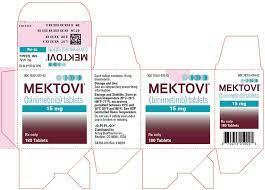
Overseas data points out that inhibiting BRAF alone Although short-term control can be achieved, cells often "escape" through bypass pathways or downstream activation, resulting in a limited maintenance time of efficacy. After combined with bimetinib, the MEK port is blocked simultaneously, making it more difficult for tumor cells to restore signals through alternative pathways, thereby prolonging the control time and reducing some mechanism-related responses. It is based on this clear biological logic that canafenib and bimetinib are widely used in the field of metastatic melanoma and have been included in standard recommendations in the United States, Europe and other places. For metastatic non-small cell lung cancer carrying BRAF V600E mutation, this combination also appears in overseas guidelines, making it gradually receive more attention in the precision treatment of lung cancer.
From the perspective of drug characteristics, the two are complementary in dosage, metabolism and adverse reaction spectrum. Compared with traditional BRAF inhibitors, canafenib has a more stable blood concentration curve, and bimetinib can reduce some of the skin reactions caused by "upstream inhibition" in combination therapy, making the overall tolerability more balanced. Many overseas centers also emphasize monitoring muscle enzyme levels, ophthalmic changes, liver function and other indicators during actual use to ensure the safety of long-term treatment.
Reference materials:https://go.drugbank.com/drugs/DB11967
[ 免责声明 ] 本页面内容来自公开渠道(如FDA官网、Drugs官网、原研药厂官网等),仅供持有医疗专业资质的人员用于医学药学研究参考,不构成任何治疗建议或药品推荐。所涉药品可能未在中国大陆获批上市,不适用于中国境内销售和使用。如需治疗,请咨询正规医疗机构。本站不提供药品销售或代购服务。


