
.jpeg)
What is the approximate market price range of filgotinib?
Filgotinib (Filgotinib) is an oral selective JAK1 inhibitor mainly used to treatrheumatoid arthritis (RA) and moderate to severe ulcerative colitis (UC). In clinical application, it is very important to standardize medication to ensure efficacy while reducing the risk of thrombosis, cardiovascular events and malignant tumors. Overseas guidelines emphasize that the dose should be flexibly adjusted based on the type of disease, patient risk assessment, and treatment response, and the principle of the lowest effective dose should always be followed.
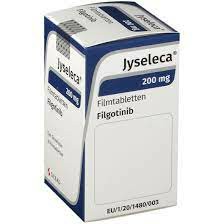
In patients with rheumatoid arthritis, the standard recommended dose of filgotinib is 200 mg orally once daily. For adult patients at increased risk for venous thromboembolism (VTE), major adverse cardiovascular events (MACE), or malignancy, 100 mg once daily may be selected as a starting dose. If the disease is not well controlled, it can be gradually increased to 200mg once a day under the guidance of a doctor to enhance the therapeutic effect. During long-term maintenance treatment, the lowest effective dose should be used as much as possible to balance efficacy and safety.
For ulcerative colitis, the dosage of filgotinib is divided into induction therapy and maintenance therapy phases. During induction therapy, the standard dose is 200 mg orally once daily. If the patient's clinical response is poor within the first 10 weeks, induction therapy can be extended to 12 weeks, still at 200 mg once daily. If the expected effect is not achieved after 22 weeks, discontinuation of the drug needs to be considered. During the maintenance treatment phase, the recommended dose is also 200 mg once daily. For high-risk patients, a low-dose regimen of 100 mg once a day can also be selected; if the disease relapses, it can be restored to 200 mg once a day under the evaluation of a physician. The general principle is to ensure that the course of treatment is sufficient to maintain disease remission while minimizing long-term risks.
The correct way of taking medication also includes paying attention to the time interval when taking medication with or on an empty stomach, regularly monitoring hematological indicators and liver and kidney function, and assessing potential infection risks. Patients should closely cooperate with their doctors during treatment and adjust the dose based on clinical response, laboratory results and individual risks to ensure maximum efficacy and safety and controllability.
Reference materials:https://go.drugbank.com/drugs/DB14845
[ 免责声明 ] 本页面内容来自公开渠道(如FDA官网、Drugs官网、原研药厂官网等),仅供持有医疗专业资质的人员用于医学药学研究参考,不构成任何治疗建议或药品推荐。所涉药品可能未在中国大陆获批上市,不适用于中国境内销售和使用。如需治疗,请咨询正规医疗机构。本站不提供药品销售或代购服务。


