
.jpeg)
2025 Clinical Progress Updates of Futibatinib
As a new irreversible FGFR2 inhibitor, Futibatinib has received great attention in the treatment of cholangiocarcinoma. Its English trade name is Lytgobi. The research and development of this type of drug focuses on accurately identifying and inhibiting the abnormally active FGFR2 signaling pathway in tumor cells. It is especially suitable for patients with FGFR2 gene rearrangements or fusions. In recent years, multiple studies have provided more sufficient evidence for the prospects of the use of forbatinib, making it gradually become one of the important choices for targeted treatment of cholangiocarcinoma (CCA) globally.
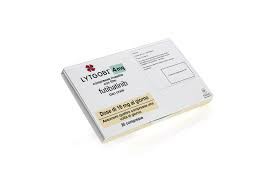
Clinical progress mainly comes from a pivotal study involving103 adult patients, all of whom had locally advanced or metastatic cholangiocarcinoma and had previously experienced at least one systemic therapy. Such patients often lack effective later-line treatment options, and FGFR2 fusions are increasingly being recognized as a potentially targetable specific tumor subgroup. All patients in the study received oral forbatinib and received long-term follow-up to assess continued response to the drug. Judging from the existing public results, forbatinib has shown relatively outstanding and stable anti-tumor activity. More than 40% of patients have significantly reduced tumor volume, and some patients can maintain a remission period ranging from several months to nearly a year. Although this type of data cannot replace large-sample verification, it has provided a key basis for its marketing and has gradually been listed as one of the optional FGFR2-targeting options in overseas guidelines.
As research deepens, the performance of forbatinib in real clinical settings has also attracted much attention. Doctors pay more attention to its performance in drug resistance mechanisms, long-term disease control capabilities, and potential in combination with immunotherapy. A new round of overseas research has begun to explore its combination with chemotherapy or immunotherapy, hoping to further extend the progression-free survival time of patients. In addition, the academic community is also conducting new research on dose optimization and adverse reaction management to improve the tolerability of the drug so that more patients can benefit in the long term.
Reference materials:https://www.lytgobi.com/
[ 免责声明 ] 本页面内容来自公开渠道(如FDA官网、Drugs官网、原研药厂官网等),仅供持有医疗专业资质的人员用于医学药学研究参考,不构成任何治疗建议或药品推荐。所涉药品可能未在中国大陆获批上市,不适用于中国境内销售和使用。如需治疗,请咨询正规医疗机构。本站不提供药品销售或代购服务。


