
.jpeg)
Detailed comparative analysis of the differences, advantages and disadvantages between Eslicarbazepine and Oxcarbazepine
Eslicarbazepine acetate, referred to as ESL) and oxcarbazepine (Oxcarbazepine, referred to as OXC) are both anti-epileptic drugs and are structurally dibenzazepine derivatives. Their pharmacological effects are mainly by blocking voltage-dependent sodium channels and reducing abnormal neuron discharge, thereby controlling epileptic seizures. Because the two structures are similar, they are often compared together in clinical applications. However, with the launch of eslicarbazepine, more and more studies have shown that it has certain advantages over oxcarbazepine in terms of pharmacokinetic characteristics, tolerability, and convenience of medication, but it also has its limitations.
1. Differences in pharmacological mechanisms and metabolic pathways
Oxcarbazepine is rapidly metabolized in the body and is mainly converted into active metabolites Levorotary-monohydroxy derivatives (S-licarbazepine), and a small amount of right-handed -monohydroxy derivatives (R-licarbazepine) are also formed. Among them, S-licarbazepine is the main anti-epileptic active ingredient. However, due to the complex metabolic pathways of oxcarbazepine, some patients have a higher proportion of R-licarbazepine in their bodies, which may be related to the occurrence of adverse reactions.
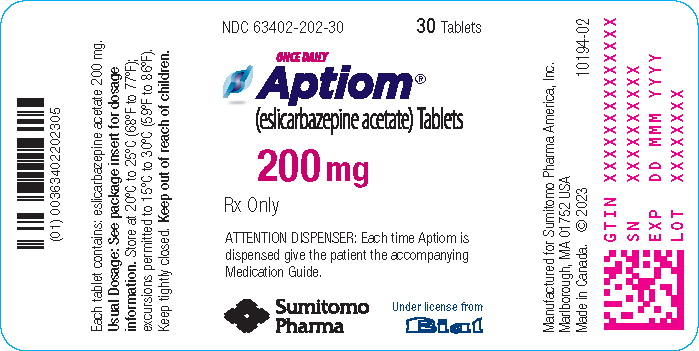
Eslicarbazepine is a prodrug, which is almost converted into S-licarbazepine in the body, and its metabolism is more direct and stable. This means that eslicarbazepine can provide more predictable blood levels and efficacy while reducing the risk of adverse reactions caused by R-licarbazepine . From a mechanism perspective, this is the core difference between the two, and it also provides a theoretical basis for subsequent differences in clinical manifestations.
2. Comparison of pharmacokinetics
1.Half-life and dosing frequency
The half-life of the metabolite of oxcarbazepine is about 8–10 hours, so it is often administered twice daily.
Eslicarbazepine has a longer half-life of 20–24 hours, supporting once-daily dosing.
In long-term treatment, eslicarbazepine is administered less frequently and has better compliance, which is especially suitable for people such as children and the elderly who have difficulty taking medications regularly.
2.Blood concentration stability
The blood concentration of oxcarbazepine fluctuates greatly, with obvious differences in peak and valley values, and some patients are prone to dose-related side effects.
As eslicarbazepine has a single metabolism, its blood concentration is more stable and its efficacy is maintained more uniformly, which helps reduce dizziness, drowsiness and other adverse reactions of the central nervous system.
3.Hepatic and renal metabolic characteristics
Oxcarbazepine and eslicarbazepine are primarily excreted via the kidneys, and dosage adjustments are required in patients with renal insufficiency.
Eslicarbazepine has fewer drug interactions and has a weaker induction effect on liver enzymes than oxcarbazepine, so it has more advantages in multi-drug combinations.
3. Comparison of efficacy
Judging from a large number of clinical trials and real-world studies, the control rates of partial seizures (focal seizures) in epilepsy are generally similar. Oxcarbazepine has been on the market longer and has rich clinical experience, and its efficacy has been widely recognized. Eslicarbazepine is a new generation drug, and studies have shown that its effectiveness is equivalent to that of oxcarbazepine, but its tolerability is slightly better.
Some studies have found that eslicarbazepine has certain advantages in reducing the frequency of epileptic seizures, especially in patients with drug-refractory epilepsy. But overall, the difference in core efficacy between the two is not significant, and is more reflected in side effects and compliance.
4. Comparison of side effects
1.Common side effects
Oxcarbazepine: dizziness, drowsiness, ataxia, headache, blurred vision.
Eslicarbazepine: Similar to central nervous system side effects, but the incidence is relatively low and mostly mild to moderate.
2.Hyponatremia
The risk of oxcarbazepine-induced hyponatremia is higher, especially in the elderly and patients with long-term use, and some severe cases require discontinuation of the drug.
Although eslicarbazepine may still cause hyponatremia, the incidence is significantly lower than that of oxcarbazepine, which is considered to be a major advantage.
3.Skin allergic reaction
Both may cause immune-related adverse reactions such as rash and drug eruption, but the overall incidence is lower than that of carbamazepine. Eslicarbazepine has no obvious advantage in this regard, but because it is metabolized more specifically, it theoretically reduces the risk of allergies caused by metabolic impurities.
4.Drug interactions
Oxcarbazepine has a strong inducing effect on liver enzymes and may reduce the efficacy of oral contraceptives, warfarin and other drugs.
Eslicarbazepine has fewer drug interactions and is safer when used in combination therapy.
5. Medication convenience and patient experience
From the perspective of patient experience, the biggest advantage of eslicarbazepine is that once-daily administration reduces the risk of forgetting and missing medication, and improves compliance. However, oxcarbazepine needs to be administered twice a day, and compliance is relatively insufficient for patients with a fast pace of life or children.
In addition, eslicarbazepine has milder side effects, more stable blood concentration, and better subjective tolerance by patients, making it more suitable for long-term maintenance treatment. However, since oxcarbazepine has been included in medical insurance in most countries, it is cheaper and more accessible, and it still has an economic advantage.
6. Summary of advantages and disadvantages
1.Oxcarbazepine (OXC) advantages and disadvantages:
Advantages: accurate curative effect, rich clinical experience, low price, and high medical insurance coverage.
Disadvantages: short half-life, requiring twice-daily dosing, large fluctuations in blood concentration, higher risk of hyponatremia, and many drug interactions.
2.Eslicarbazepine (ESL) advantages and disadvantages:
Advantages: Single and stable metabolism, long half-life supports once-daily administration, low incidence of side effects, especially hyponatremia, few drug interactions, and good patient compliance.
Disadvantages: relatively insufficient clinical experience, high prices in some areas, limited medical insurance coverage, and long-term efficacy research is not as comprehensive as oxcarbazepine.
Overall, eslicarbazepine and oxcarbazepine are effective anti-epileptic drugs on average, with little difference in efficacy. However, eslicarbazepine performs better in terms of safety, tolerability and convenience of medication. For patients who require long-term stable treatment, are concerned about the risk of hyponatremia, or have poor compliance, eslicarbazepine has more advantages; in terms of economy and accessibility, oxcarbazepine is still the first choice. Clinically, the most appropriate drug should be selected based on the patient's individual situation (such as age, concomitant medications, and economic conditions).
Reference materials:https://www.drugs.com/
[ 免责声明 ] 本页面内容来自公开渠道(如FDA官网、Drugs官网、原研药厂官网等),仅供持有医疗专业资质的人员用于医学药学研究参考,不构成任何治疗建议或药品推荐。所涉药品可能未在中国大陆获批上市,不适用于中国境内销售和使用。如需治疗,请咨询正规医疗机构。本站不提供药品销售或代购服务。


