
.jpeg)
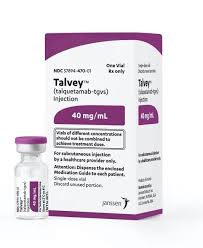
Detailed instructions and usage instructions for talquetamab-tgvs
1. Overview of drugs
Talquetamab-Talvey is an innovative bispecific T cell-linked antibody. It specifically targets the CD3 receptor on the surface of T cells and the GPRC5D receptor on the surface of multiple myeloma cells, accurately identifying and eliminating malignant plasma cells through the immune system, thereby achieving anti-tumor effects. This drug marks a new breakthrough in immunotherapy in the treatment of multiple myeloma, providing a new treatment option for patients who are still difficult to control their disease after multiple lines of treatment.
2. Scope of indications
Taquitutumab is mainly used to treat adult patients with relapsed or refractory multiple myeloma, especially those who have received at least four systemic therapies (including proteasome inhibitors, immunomodulators and anti-CD38 monoclonal antibodies) and whose disease has progressed. For groups where traditional treatments have no obvious effect, the drug can significantly improve the disease control rate and duration of remission.
3. Usage and dosage
Taquitumumab is administered as a subcutaneous injection, using an ascending dose regimen to reduce the risk of cytokine release syndrome (CRS):
1. Weekly plan: 0.01 mg/kg on day 1, 0.06 mg/kg on day 4, 0.4 mg/kg on day 7, and maintain once a week. If adverse reactions occur, adjustments can be made flexibly within 2 to 7 days after the last dose.
2. Biweekly regimen: 0.01 mg/kg on day 1, 0.06 mg/kg on day 4, 0.4 mg/kg on day 7, and 0.8 mg/kg on day 10. Maintain once every two weeks with an interval of no less than 12 days.
After each incremental dose administration, it is recommended that the patient be hospitalized for observation48 hours to prevent CRS or infusion reactions.
4. Pretreatment suggestions
To reducethe risk of CRS and other immune-related reactions, the following medications should be used 1 to 3 hours before administration:
Corticosteroid: dexamethasone16mg or equivalent;
Antihistamine: diphenhydramine50mg (orally or intravenously);
Fever-reducing drug: Acetaminophen650-1000mg.
For patients who have experienced delayed administration or experienced CRS reaction, doctors may repeat pretreatment in subsequent courses of treatment as appropriate.
5. Dose adjustment strategy
If the dosing interruption is too long, the dose needs to be increased again. Taking the weekly regimen as an example, if the interruption exceeds 28 days, it should be returned to a lower dose and restarted; if it exceeds 56 days, discontinuation of the drug should be considered. The principle of adjusting the biweekly plan is similar. All dosage changes should be made under physician supervision to ensure a balance of safety and efficacy.
6. Common adverse reactions
Common adverse reactions during treatment with Taquitutumab include fever, dysgeusia, dry mouth, rash, fatigue, weight loss, hypotension and musculoskeletal pain. Some patients may also develop cytokine release syndrome (CRS) or mild infection. Common grade 3 or 4 abnormalities in laboratory tests include decreases in lymphocytes, white blood cells, and neutrophils, and decreases in hemoglobin. Most of these side effects are controllable and can be alleviated through dose adjustment or supportive treatment.
7. Storage and operation requirements
Taquitumumab is a sterile, preservative-free, colorless to pale yellow solution that should be stored refrigerated in the dark at2°C to 8°C (36°F to 46°F) and should not be frozen. The prepared injection solution should be used immediately; if temporary storage is required, it can be stored under refrigerated conditions for no more than 24 hours, and then placed at room temperature for up to 24 hours. The solution that exceeds the time needs to be discarded. Before use, the medicinal solution should be allowed to return to room temperature before injection.
8. Analysis of mechanism of action
The core mechanism of Taquitumab lies in its dual targeting function: one end binds to the CD3 receptor on the surface of T cells to activate the immune system; the other end binds to the GPRC5D receptor of multiple myeloma cells to achieve precise recognition and cell lysis.
Through this mechanism, drugs induceT cells to release pro-inflammatory cytokines and directly kill tumor cells. Animal experiments show that taquitumab exhibits significant anti-tumor activity in multiple myeloma mouse models and can effectively reduce tumor burden. It is worth noting that GPRC5D is also expressed in some healthy tissues such as skin and tongue mucosa, so skin and mucosa-related adverse reactions need to be closely monitored during medication.
Reference materials:https://www.drugs.com
[ 免责声明 ] 本页面内容来自公开渠道(如FDA官网、Drugs官网、原研药厂官网等),仅供持有医疗专业资质的人员用于医学药学研究参考,不构成任何治疗建议或药品推荐。所涉药品可能未在中国大陆获批上市,不适用于中国境内销售和使用。如需治疗,请咨询正规医疗机构。本站不提供药品销售或代购服务。


