
.jpeg)
Which generation of TKI does Bosutinib belong to?
Bosutinib is classified as a second-generation BCR-ABL tyrosine kinase inhibitor (TKI). It was originally developed to overcome the resistance problem that occurred after treatment with the first-generation TKI, Imatinib. Compared with imatinib, bosutinib has been optimized in molecular structure, has stronger target binding ability and broader anti-mutation spectrum, and remains active against a variety of BCR-ABL mutants. Its mechanism of action is mainly by inhibiting the activity of BCR-ABL and SRC family kinases, thereby blocking the malignant cell proliferation signaling pathway and achieving anti-tumor effects.
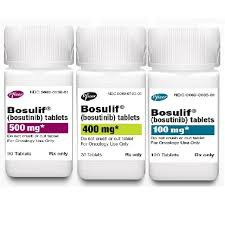
As a second generationTKI, bosutinib is widely used in international clinical practice to treat patients with chronic phase or accelerated phasechronic myeloid leukemia (CML), especially for those patients who are ineffective or intolerant to imatinib or other TKI treatments. Compared with similar drugs such as dasatinib and nilotinib, bosutinib has unique advantages in drug resistance control. At the same time, its adverse reaction spectrum is different, especially in liver function monitoring and gastrointestinal tolerance, showing unique clinical characteristics.
In recent years, with the emergence of third-generation TKIs such as Ponatinib, CML treatment has gradually become more individualized and precise. But bosutinib is still considered a very important part of the treatment plan. For some patients with specific mutations or individuals who experience adverse reactions after long-term treatment, doctors often choose bosutinib as an alternative or adjustment regimen.
With the in-depth study of pharmacokinetics and genotyping in the future, the status of bosutinib inCML management is expected to be further enhanced. If bosutinib is successfully approved for marketing in China, its price is expected to drop significantly through medical insurance negotiations or centralized procurement policies, thereby improving patient affordability. As competition for targeted drugs intensifies and policy support strengthens, Chinese patients may benefit from this highly effective TKI treatment earlier.
Reference materials:https://go.drugbank.com/drugs/DB06616
[ 免责声明 ] 本页面内容来自公开渠道(如FDA官网、Drugs官网、原研药厂官网等),仅供持有医疗专业资质的人员用于医学药学研究参考,不构成任何治疗建议或药品推荐。所涉药品可能未在中国大陆获批上市,不适用于中国境内销售和使用。如需治疗,请咨询正规医疗机构。本站不提供药品销售或代购服务。


