
.jpeg)
Afatinib (Gitari) lung cancer cure success rate and clinical data analysis
Afatinib is a second-generation EGFR tyrosine kinase inhibitor for patients with EGFR mutation-positive non-small cell lung cancer (NSCLC). Although the word "cure" is used cautiously in the context of most advanced lung cancer, in some early-stage patients or when the lesions are well controlled, the possibility of long-term survival and disease progression-free is significantly improved. The following is an analysis of afatinib's cure "success rate" (long-term disease-free survival), efficacy indicators and actual performance based on published clinical trials and patient data.
1. Efficacy indicators and interim data in clinical trials
Multiple large clinical trials (such as the LUX-Lung series) were positive for afatinib in EGFR mutations (especially Exon19 deletion or L858R point mutations) NSCLC efficacy was evaluated in patients. For example, in the LUX-Lung 3 and LUX-Lung 6 studies, afatinib showed a significant improvement in progression-free survival (PFS) compared with standard chemotherapy, with a median PFS is usually around 11-13 months, which is significantly longer than the 6-8 months in the chemotherapy group. The overall response rate (Objective Response Rate, ORR) in these studies is also typically between 50-60% .
In these studies, although the rate of complete response (Complete Response, CR) is not high (usually less than 10%), the proportion of patients with partial response (Partial Response, PR) + stable disease (Stable Disease, The disease control rate (Disease Control Rate, DCR) composed of SD) is very high, often exceeding 80%. This shows that most patients with EGFR mutations who receive afatinib treatment can achieve tumor shrinkage or stable disease, and achieve a remission period of several months to more than a year.
2. Long-term survival andpossibility of “cure”
"Cure of lung cancer" usually means no trace of cancer at all and no recurrence for a long time (many years), which is extremely rare for patients with advanced stages. There is currently no evidence that afatinib can truly cure most patients with advanced or metastatic lung cancer. However, in the context of early diagnosis, combined with adjuvant or concurrent adjuvant therapy (including radiotherapy/targeted therapy) after surgical resection, reports have shown that EGFR-TKI (including afatinib) reduces the recurrence rate and prolongs disease-free survival and overall survival. For example, in some adjuvant therapy studies, patients with early-stage EGFR mutation-positive NSCLC received TKI treatment and had significantly better disease-free survival than those who did not.
Some patients still maintain good disease control (for example, PFS up to two to three years or even longer) after receiving afatinib treatment for many years, especially those with sensitive mutation types, small tumor burden, good physical status, no or few comorbidities, and no drug-resistant mutations or rapid progression. These individuals, while not warranted to be called "cured," can be considered examples of long-term remission and near-"functional cure."
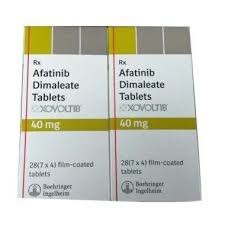
3. Factors affecting long-term efficacy and“success rate”
The efficacy of afatinib and whether it can maintain long-term disease control or be close to itThe "cured" state is affected by many factors:
1.Mutation type and sensitivity: Exon 19 Deleted EGFR mutations generally respond better to EGFR-TKI median PFS And overall survival (Overall Survival, OS) is usually slightly better than L858R type.
2.Disease stage and tumor burden: Patients with early diagnosis, local lesions, and no extensive metastasis have better prognosis. Even if patients with advanced or metastatic cancer respond well, they often experience recurrence or drug resistance.
3.Resistance mechanism: As the treatment time increases, resistance mutations (such as T790M , etc.) or bypass signals (such as MET amplification, HER2, PI3K/AKT , etc.) may appear, reducing drug effectiveness. Treatment strategies such as combination medications, switching medications, or subsequent lines of therapy can slow this process.
4.Patient physical status and comorbidities: age, liver and kidney function, overall health, lung function, etc. will affect tolerance and survival; side effect management is also very critical.
4. Actual“Success” rate and realistic expectations
Based on existing trials and real-world data, for EGFR mutation-positive advanced NSCLC patients, using afatinib can expect a median overall survival (OS) of 20-30 Months or longer (depending on the study and patient population), while progression-free survival is usually about one year. But understand that this does not equal cure. The proportion of patients with complete remission and long-term relapse-free status is low, probably in only a few percent of patients.
For patients who expect to be "cured" (especially in early stage, postoperative adjuvant treatment situations), it is a reasonable goal to delay recurrence and improve disease-free survival through strategies such as surgery + afatinib. However, although there are occasional reports of complete removal of lung cancer without recurrence for many years, it cannot be regarded as a general expectation.
Afatinib did bring about significant improvements in EGFR mutation-positive NSCLC —increased response rates, prolonged progression-free survival, improved overall survival, and maintained control in some patients for many years. But true “cure” (complete freedom from cancer and long-term freedom from recurrence) is still very rare in advanced or metastatic lung cancer. For each patient, the focus is on early diagnosis, correct mutation detection, medication adherence, monitoring for resistance development, and symptomatic management. Doing so can significantly increase the “success rate,” allowing more people to achieve longer periods of stable disease and even nearly normal functional lives.
Reference materials:https://www.drugs.com/
[ 免责声明 ] 本页面内容来自公开渠道(如FDA官网、Drugs官网、原研药厂官网等),仅供持有医疗专业资质的人员用于医学药学研究参考,不构成任何治疗建议或药品推荐。所涉药品可能未在中国大陆获批上市,不适用于中国境内销售和使用。如需治疗,请咨询正规医疗机构。本站不提供药品销售或代购服务。


