
.jpeg)
Analysis of the advantages and clinical use value of doxorubicin liposomes compared with ordinary doxorubicin
Doxorubicin (Doxorubicin) is a chemotherapy drug widely used in various malignant tumors. Its classic dosage form is ordinary doxorubicin. However, ordinary doxorubicin also has side effects such as cardiotoxicity, bone marrow suppression, and gastrointestinal adverse reactions while treating tumors, which limits its clinical application to a certain extent. In order to improve the safety and efficacy of drugs, liposomal doxorubicin (Liposomal Doxorubicin) came into being. It encapsulates doxorubicin in liposomes through nanotechnology, thereby changing the distribution and release characteristics of the drug in the body and achieving better therapeutic effects and safety.
First, liposomal doxorubicin has significant pharmacokinetic advantages. Ordinary doxorubicin is widely distributed in the body and is particularly prone to accumulation in cardiac tissue, causing myocardial damage. Liposome encapsulation technology can prolong the circulation time of drugs in the blood, enhance passive targeting of tumor sites (through enhanced vascular permeability and tumor tissue EPR effect), allowing drugs to be more concentrated in tumor tissues instead of the heart and normal tissues. This change not only improves tumor killing efficiency, but also significantly reduces cardiotoxicity, making long-term or high-dose chemotherapy safer. Multiple clinical studies have shown that liposomal doxorubicin significantly reduces the incidence of cardiac function impairment when the cumulative dose reaches above the cardiac tolerance threshold of ordinary doxorubicin.
Secondly, liposomal doxorubicin also performs well in controlling side effects. Common adverse reactions of ordinary doxorubicin include nausea, vomiting, alopecia, bone marrow suppression, and mucositis. Liposomal doxorubicin has lower peak plasma concentrations due to its sustained drug release and targeted distribution, thereby reducing the occurrence of acute toxicity. Especially in elderly patients or patients with underlying cardiovascular diseases, liposomal doxorubicin significantly reduces the risk of medication and makes the chemotherapy regimen sustainable. In addition, liposomal doxorubicin also has certain advantages in reducing skin reactions (hand-foot syndrome) and gastrointestinal irritation, allowing patients to improve their quality of life.
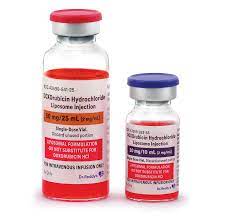
Third, liposomal doxorubicin shows broad potential in terms of clinical indications and application value. Liposomal doxorubicin has been used in a variety of malignant tumors such as ovarian cancer, breast cancer, multiple myeloma and Kaposi sarcoma. Liposomal doxorubicin has similar efficacy but better cardiotoxicity and tolerability than regular doxorubicin in patients with recurrent advanced ovarian cancer. For patients with breast cancer, especially those who have received anthracycline chemotherapy, liposomal doxorubicin provides an effective rechemotherapy option. In addition, the good safety profile of liposomal doxorubicin makes it one of the preferred options in patients with immunosuppressed states or elderly patients.
Finally, the value of liposomal doxorubicin in clinical treatment strategies is not only reflected in efficacy and safety, but also in the advantages of combination therapy and individualized treatment. Liposomal doxorubicin can be used in combination with targeted drugs, immune checkpoint inhibitors and other chemotherapy drugs to form a multi-modal treatment plan. In situations where longer treatment courses or higher cumulative doses are required, liposomal doxorubicin provides better tolerability support, allowing patients to complete optimized treatment regimens, thereby improving overall survival. In addition, liposomal doxorubicin provides a feasible option for personalized treatment and reduces treatment-related risks for patients with low cardiac function or at risk for cardiovascular disease.
Taken together, liposomal doxorubicin has obvious advantages over ordinary doxorubicin in drug distribution, toxicity control, efficacy maintenance and personalized treatment strategies. It not only improves tumor targeting, reduces cardiac and systemic toxicity, but also provides safer chemotherapy options for high-risk patients. In future tumor treatment, liposomal doxorubicin is expected to become an important substitute for ordinary doxorubicin and play a greater clinical value in multi-modal combination therapy and personalized chemotherapy.
Reference materials:https://www.drugs.com/
[ 免责声明 ] 本页面内容来自公开渠道(如FDA官网、Drugs官网、原研药厂官网等),仅供持有医疗专业资质的人员用于医学药学研究参考,不构成任何治疗建议或药品推荐。所涉药品可能未在中国大陆获批上市,不适用于中国境内销售和使用。如需治疗,请咨询正规医疗机构。本站不提供药品销售或代购服务。


