
.jpeg)
What is the difference between filgotinib and upadatinib
Filgotinib and Upadacitinib are both small molecule Janus kinase inhibitors (JAK inhibitors), which are mainly used clinically to treat autoimmune diseases, such as rheumatoid arthritis, ulcerative colitis, etc. However, although they are both JAK inhibitors, they have obvious differences in target selectivity, scope of indications, pharmacokinetic characteristics and clinical use strategies. These differences determine their application scenarios and performance in actual treatment.
From the perspective of target selectivity, filgotinib is a highly selective JAK1 inhibitor. It is designed to inhibit the pro-inflammatory cytokine signaling pathway to the greatest extent while minimizing interference with JAK2, JAK3 and TYK2. JAK1 plays a central role in the pathogenesis of various inflammatory diseases. For example, inflammatory factor signals such as IL-6 and IFNγ in rheumatoid arthritis and ulcerative colitis mainly rely on the JAK1 pathway. Therefore, filgotinib can precisely regulate the inflammatory response, thereby alleviating inflammation and symptoms while reducing the incidence of serious adverse events. In contrast, uppatinib also targets JAK1, but its selectivity for JAK1 is slightly lower than that of filgotinib, and it has a cross-inhibitory effect on JAK2 and JAK3 to a certain extent, which makes upatinib potentially more extensive in immune regulation, but at the same time, the risk of potential adverse reactions is also slightly higher.
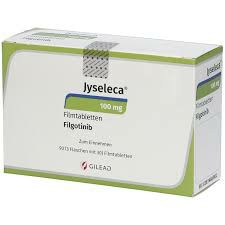
From the perspective of indications, there are significant differences between the two. Filgotinib is mainly approved for the treatment of moderate to severe rheumatoid arthritis and active ulcerative colitis in patients who are ineffective or poorly tolerated by traditional disease-modifying antirheumatic drugs (DMARDs). It has shown significant efficacy in relieving arthritis symptoms, improving joint function, and delaying joint damage. It also has a positive effect on intestinal mucosal inflammation and symptom control in patients with ulcerative colitis. Upadatinib has a wider range of indications, not only for rheumatoid arthritis, but also for psoriatic arthritis, ankylosing spondylitis, non-radiographic axial spondyloarthritis, ulcerative colitis, Crohn's disease and giant cell arteritis and other inflammatory diseases. In addition, upadatinib has also shown certain efficacy in polyarticular juvenile idiopathic arthritis and juvenile psoriatic arthritis in pediatric patients, while fibrogotinib has not yet been widely used in the pediatric population.
Pharmacokinetic characteristics are also an important reflection of the differences between the two. Figotinib has high oral bioavailability, is mainly metabolized by the liverCYP3A4, and has a moderate half-life, allowing it to maintain effective plasma concentrations with once-daily administration. Upatinib is also administered orally, but its pharmacokinetics is slightly complex. Some doses may require once or twice a day, and the interaction with CYP3A4 and P-gp substrate drugs is more significant. Therefore, more precise clinical management is required for combined medication and dosage adjustment.
In terms of safety and tolerability, filgotinib is highly selective in its JAK1 inhibition. The incidence of serious adverse events in long-term use is relatively low, especially in hematology and cardiovascular risks. Due to the partial cross-inhibition of JAK2/3, upadatinib may increase the risk of infection, thrombosis, cardiovascular events, and hematological abnormalities. Therefore, more stringent monitoring and management are required in clinical use.
Reference materials:https://go.drugbank.com/drugs/DB14845
[ 免责声明 ] 本页面内容来自公开渠道(如FDA官网、Drugs官网、原研药厂官网等),仅供持有医疗专业资质的人员用于医学药学研究参考,不构成任何治疗建议或药品推荐。所涉药品可能未在中国大陆获批上市,不适用于中国境内销售和使用。如需治疗,请咨询正规医疗机构。本站不提供药品销售或代购服务。


