
.jpeg)
Precautions and effects of combined treatment with capmatinib (Touradida) and radiotherapy
Capmatinib (Capmatinib) is a selective MET inhibitor, mainly suitable for the treatment of patients carrying MET exon 14 skipping mutations (METex14 Skipping) patients with locally advanced or metastatic non-small cell lung cancer (NSCLC). In recent years, with the advancement of targeted therapy and radiotherapy technology, the combination of capmatinib and radiotherapy has gradually become one of the treatment strategies for certain patients, especially showing potential advantages in local control and prolonged survival. However, the implementation of combination therapy requires full consideration of pharmacological characteristics, treatment timing, side effects, and other factors in order to maximize the efficacy and reduce risks.
First of all, in terms of therapeutic effect, capmatinib blocks the proliferation and invasion of tumor cells by precisely inhibiting the MET signaling pathway, while radiotherapy achieves local control of lesions by directly destroying the DNA of tumor cells. In clinical practice, for patients with local progression or oligometastasis, on the basis of continuous use of capmatinib, supplemented by radiotherapy, local control can be achieved without changing the systemic treatment regimen, thereby delaying the emergence of drug resistance and improving the overall survival prognosis of the patient. Some studies have shown that for patients with intracranial oligometastases, capmatinib combined with radiotherapy can achieve higher local response rates and longer progression-free survival (PFS), especially when combined with stereotactic radiotherapy (SRS) or conformal radiotherapy (IMRT). The efficacy is more prominent.
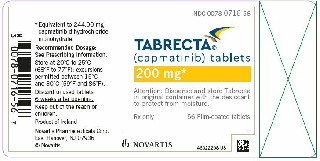
Secondly, reasonable planning is required in the timing of combined treatment. Under normal circumstances, it is recommended to perform systemic treatment with capmatinib first and observe the systemic effects. If the systemic lesions are controlled and only some lesions progress or remain locally, radiotherapy can be considered for local lesions to extend the use period of capmatinib. If radiotherapy is given too early, the skin, lungs and other tissues may be more susceptible to adverse drug reactions after radiation damage; if radiotherapy is given too late, the best local control window may be missed. Therefore, the combination plan usually needs to be jointly evaluated by a multidisciplinary team (MDT) to determine the sequence and time interval of radiotherapy and targeted drugs based on the patient's lesion location, physical condition, and expected efficacy.
Finally, great attention must be paid to the additive risk of adverse reactions during combination therapy. Common side effects of capmatinib include peripheral edema, abnormal liver function, nausea, fatigue, and interstitial pneumonia; radiotherapy may cause local skin reactions, radiation pneumonitis, esophagitis, etc. When used together, especially in the setting of chest radiotherapy, the risks of interstitial pneumonitis and radiation pneumonitis may be additive, leading to serious pulmonary adverse events. Therefore, patients' respiratory symptoms and imaging changes should be closely monitored clinically. Once dyspnea, dry cough, or abnormalities such as ground-glass opacity appear on imaging, the drug should be promptly discontinued, radiotherapy should be suspended, and hormonal or symptomatic treatment should be performed. At the same time, monitoring of liver function abnormalities is also very important, because both drug metabolism and radiation damage may cause a certain burden on the liver.
To sum up, the combined treatment of capmatinib and radiotherapy has certain potential in terms of local control, delaying drug resistance and improving overall efficacy, but it must be strictly controlled by an experienced clinical team in terms of indications and implementation details. Reasonable timing, precise radiotherapy technology and strict adverse reaction monitoring are the keys to ensuring efficacy and safety. As more clinical studies progress, this combination strategy is expected to become one of the important treatments for patients with MET mutationNSCLC, providing more flexible and effective treatment options for complex cases.
Reference materials:https://www.drugs.com/
[ 免责声明 ] 本页面内容来自公开渠道(如FDA官网、Drugs官网、原研药厂官网等),仅供持有医疗专业资质的人员用于医学药学研究参考,不构成任何治疗建议或药品推荐。所涉药品可能未在中国大陆获批上市,不适用于中国境内销售和使用。如需治疗,请咨询正规医疗机构。本站不提供药品销售或代购服务。


