
.jpeg)
Detailed explanation of the indications and treatment scope of Asnib/Assiminib
Asciminib (Asciminib, also known as Asciminib) is a new oral tyrosine kinase inhibitor, mainly used for the treatment of chronic myelogenous leukemia (CML). It works by specifically targeting all osteric sites of the BCR-ABL1 protein (STAMP inhibition mechanism), which is different from traditional ATP competitive tyrosine kinase inhibitors. BCR-ABL1fusion gene is the main pathogenic driver of CML. By inhibiting its activity, asinib can effectively block the abnormal proliferation and survival signals of tumor cells, thereby achieving the purpose of controlling the development of the disease.
In terms of indications, asinib is mainly used to treat patients with chronic myelogenous leukemia who are resistant or intolerant to traditional tyrosine kinase inhibitors (such as imatinib, dasatinib, nilotinib, etc.). Clinical studies have shown that for patients who have received multiple TKI treatments and still have disease progression or drug resistance, asinib can significantly improve the molecular response rate and progression-free survival. Especially for patients with the T315I mutation, asinib has shown good efficacy, while traditional ATPcompeting TKIs usually have limited efficacy against this mutation.
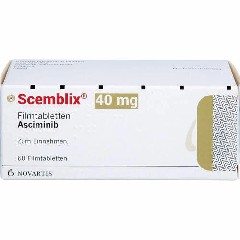
The therapeutic scope of asinib is not limited to the chronic phaseCML, but its potential application value in the accelerated phase and myeloid crisis phaseCML has also been explored in clinical trials. Studies have shown that for patients in the accelerated phase or myeloid crisis phase, although the efficacy is slightly lower than that in the chronic phase, certain disease control can still be achieved through early combination treatment or dose adjustment. In addition, asinib has the ability to broadly cover the resistance mutation spectrum of CML patients, making it an important choice in drug resistance treatment strategies, providing new treatment options for patients who cannot tolerate or have poor response to other TKIs.
In clinical applications, asinib is usually administered orally, and the starting dose and dose adjustment need to be determined based on the patient's tolerance, liver and kidney function, and combined medication. The adverse reactions are generally controllable. Common side effects include thrombocytopenia, leukopenia, anemia, and mild to moderate gastrointestinal reactions such as nausea and diarrhea. Compared with traditional TKI, asinib has a more selective targeting effect and is relatively less toxic to normal cells, which makes its long-term maintenance treatment feasible.
In general, asinib provides a new treatment option for CML patients, especially those who are resistant or intolerant to other TKI. Its unique targeting mechanism and ability to cover key drug-resistant mutations make it of great clinical value in the treatment of chronic myelogenous leukemia. In the future, as more clinical research data accumulates, Asnib is expected to play a broader role in the treatment of early-stage CML patients and combination treatment strategies, providing patients with more personalized and precise treatment options.
Reference materials:https://www.drugs.com/
[ 免责声明 ] 本页面内容来自公开渠道(如FDA官网、Drugs官网、原研药厂官网等),仅供持有医疗专业资质的人员用于医学药学研究参考,不构成任何治疗建议或药品推荐。所涉药品可能未在中国大陆获批上市,不适用于中国境内销售和使用。如需治疗,请咨询正规医疗机构。本站不提供药品销售或代购服务。


