
.jpeg)
Conditions for RET fusion-positive patients to take Platinib (Pujihua)
Pralsetinib (Pralsetinib) is a highly selective RET inhibitor jointly developed by Blueprint Medicines and Roche. The drug was approved in the United States in 2020 for the treatment of RET fusion-positive non-small cell lung cancer (NSCLC) and RETfusion-positive thyroid cancer. In recent years, Platinib has also been approved for marketing in China and has gradually entered clinical use. RET Fusion is a type of driver gene change, accounting for about 1%~2% of non-small cell lung cancer. It is mainly seen in lung adenocarcinoma patients who have never smoked or light smokers. They have poor response to traditional chemotherapy and EGFR inhibitors, so accurate detection and targeted therapy are particularly important.
The prerequisite for the use of platinib is that the patient's tumor must have RET gene fusion or rearrangement. Common fusion partners include KIF5B-RET, CCDC6-RET, etc., through NGS (next generation sequencing) or FISH, PCR and other molecular testing methods to confirm RET fusion positivity are the primary conditions for determining whether a patient is suitable for the use of this drug. In addition, both treatment-naïve patients and patients who have progressed after prior treatment may benefit from platinib as long as RET fusion is clearly present.
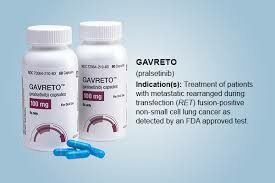
Platinib is suitable for patients with locally advanced or metastatic RETfusion-positive non-small cell lung cancer and thyroid cancer. It can be used as first-line treatment or as second-line treatment after failure of other treatments. In the clinical study ARROW trial, platinib was effective in previously untreated RET fusion-positive NSCLC patients. The objective response rate (ORR) among patients was as high as 70%; among patients who had previously received chemotherapy, the ORR also exceeded60%, showing good efficacy. Therefore, patients with advanced or metastatic RET fusion-positive disease, especially those who are not suitable for chemotherapy or are resistant to chemotherapy, are the main candidates for this drug.
In addition to genetic and disease typing, the patient's overall physical condition is also an important basis for evaluating medication. Normal liver and kidney function, good bone marrow function, and no history of severe drug allergies are generally required. Pregnant and lactating women should use with caution. During the period of medication, it is necessary to regularly monitor blood routine, liver and kidney function, and pay attention to possible side effects, such as hypertension, elevated liver enzymes, or the risk of interstitial lung disease. Patients who are RET fusion positive, have advanced or metastatic disease, and have systemic conditions permitting, may consider taking platinib after a doctor's evaluation to achieve more precise and effective targeted therapy.
Reference materials:https://www.drugs.com/
[ 免责声明 ] 本页面内容来自公开渠道(如FDA官网、Drugs官网、原研药厂官网等),仅供持有医疗专业资质的人员用于医学药学研究参考,不构成任何治疗建议或药品推荐。所涉药品可能未在中国大陆获批上市,不适用于中国境内销售和使用。如需治疗,请咨询正规医疗机构。本站不提供药品销售或代购服务。


