
.jpeg)
Cevostamab combined with pomalidomide/dexamethasone is safe and effective in the treatment of R/R myeloma
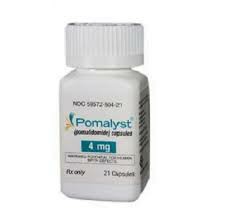
According to the publishedCAMMA Results from the dose expansion portion of a Phase 1 study (NCT04910568) adding the FcRH5/CD3-directed T cell bispecific antibody cevostamab (RG6160, BFCR4350A) to pomalidomide (Pomalidomide) and dexamethasone, produced a manageable safety profile and elicited high response rates in BCMA-directed therapy in patients with relapsed/refractory multiple myeloma (MM).
Adverse events (AEs) occurred in all patients (n=29) who received the target dose of 70 mg cevostamab during the study for a median of 10.4 months (95% CI, 6.3-15.5). The incidence rates of grade 3/4 adverse events and serious adverse events were 89.7% and 55.2%, respectively. No patients experienced grade 5 adverse events. Adverse events leading to discontinuation of cevostamab and pomalidomide occurred in 3.4% and 20.7% of patients, respectively; no adverse events led to discontinuation of dexamethasone.
Among patients who received cevostamab at a target dose of 105 mg (n=25), all patients experienced adverse events during a median study duration of 8.3 months (95% CI, 3.3-15.7). The incidence rates of grade 3/4 adverse events and serious adverse events were 96.0% and 60.0%, respectively. One patient experienced a grade 5 adverse event. Adverse events leading to discontinuation of pomalidomide and dexamethasone occurred in 4.0%, 24.0% and 8.0% of patients, respectively.
Adverse events of interest in both cohorts included neutropenia, anemia, thrombocytopenia, cytokine release syndrome (CRS), infection, and rash.
For patients in the70 mg cohort, the overall response rate (ORR) was 86.2% (95% CI, 71.9%-100%). The incidence rates of strict complete response (sCR), complete response (CR), very good partial response (VGPR) and complete response (PR) were 34.5%, 10.3%, 27.6% and 13.8% respectively. The ORR for patients in the 105 mg cohort was 88.0% (95% CI, 73.3%-100%). The incidence rates of sCR, CR, VGPR and PR were 36.0%, 12.0%, 28.0% and 12.0% respectively. Cevostamab combined with pomalidomide/dexamethasone induced deep and durable responses in BCMA [directed therapy]-naïve patients.
FcRH5 is expressed only in the B cell lineage and is ubiquitous in multiple myeloma cells. Its expression is independent of BCMA expression, making it an attractive therapeutic target for multiple myeloma. Data from a Phase 1 trial (NCT03275103) of cevostamab monotherapy in patients with advanced multiple myeloma showed that the drug had a manageable safety profile and induced deep and durable responses, which were particularly evident in patients receiving BCMA-guided therapy for the first time.
The CAMMA 1 study enrolled patients with relapsed/refractory multiple myeloma who had received at least one prior therapy, including an immunomodulatory drug and a proteasome inhibitor. Patients with pomalidomide-refractory disease were excluded.
The primary endpoints are safety and tolerability and determination of the recommended Phase 2 dose. Secondary endpoints include pharmacokinetics, pharmacodynamics, and antitumor activity. Data from the Arm B safety trial phase of CAMMA 1 showed that at the August 21, 2023 data cutoff, the triplet regimen was associated with manageable toxicities and resulted in generally durable responses that deepened over time in eight evaluable patients.
Among patients who received 70 mg of cevostamab in the dose-expansion phase, the median age was 65 years, the median number of prior lines of therapy was 2, 72.4% of patients had level III exposure, and 72.4% were refractory to their last line of therapy. Among patients receiving 105 mg of cevostamab, the median age was 65 years and the median number of prior lines of therapy was 2.
In65.5% of patients in the 70 mg cohort developed an infection. These include upper respiratory tract infections, pneumonia, COVID-19, urinary tract infections, and rhinitis. Grade 3/4 and severe infections occurred in 13.8% and 17.2% of patients, respectively. 62.1% of patients required immune globulin injection. In the 105 mg cohort, 72.0% of patients developed an infection. These include URTI, pneumonia, COVID-19 and UTI. The incidence rates of grade 3/4 and severe infections were 28.0% and 36.0%, respectively. 68.0% of patients required immune globulin injection. No patients in either group developed grade 5 infections or infections that resulted in discontinuation of any study drug.
Among patients who received double-ascending dose therapy, 78.6%, 21.4%, and 3.6% reported any grade, grade 2 or higher, and grade 3 or higher CRS, respectively. Overall, 35.7%, 42.9%, and 21.4% of patients received tocilizumab, corticosteroids, or tocilizumab and corticosteroids, respectively, for CRS.
Patients who received three ascending dose treatmentsGrade 2 or higher CRS and tocilizumab use were significantly lower. CRS of any grade, grade 2 or higher, and grade 3 or higher was reported by 53.8%, 7.7%, and 0% of patients. Overall, 7.7%, 3.8%, and 3.8% of patients received tocilizumab, corticosteroids, or tocilizumab and corticosteroids for CRS, respectively. Triple escalating doses appear to provide an optimal CRS relief [strategy].
In the double-ascending dose cohort, 46.7% (95% CI, 21.4%-71.9%) of evaluable patients with minimal residual disease (MRD) who received cevostamab at the target dose of 70 mg achieved an MRD-negative CR or better at any time; the median study duration in this population was 13.6 months. Among MRD-evaluable patients who received the 105 mg target dose of cevostamab in the double-ascending dose cohort, 38.5% (95% CI, 12.0%-64.9%) achieved an MRD-negative CR or better at any time; the median study duration in this population was 12.5 months (range, 3.3-15.7). Furthermore, analysis of response evolution stratified by target dose levels showed that responses deepened over time at both target dose levels.
Reference materials:https://www.onclive.com/view/cevostamab-plus-pomalidomide-dexamethasone-is-safe-active-in-r-r-myeloma
[ 免责声明 ] 本页面内容来自公开渠道(如FDA官网、Drugs官网、原研药厂官网等),仅供持有医疗专业资质的人员用于医学药学研究参考,不构成任何治疗建议或药品推荐。所涉药品可能未在中国大陆获批上市,不适用于中国境内销售和使用。如需治疗,请咨询正规医疗机构。本站不提供药品销售或代购服务。


